
From Acronym to Action: Tick-Box Exercise or Business Imperative?


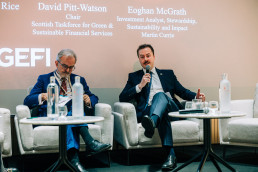

In a compelling panel led by Dame Susan Rice, joined by David Pitt Watson and Eoghan McGrath, Martin Currie the conversation centered on the key barriers, motivations, and complexities surrounding ESG integration across organisations and industries. Together, they unpacked critical issues such as measurement challenges, the role of regulation, and the need for governance alignment to embed ESG into business strategy effectively.
Key Challenges to ESG Integration
The panel identified three primary barriers to ESG integration:
- Measurement and Timing: ESG benefits often take time to materialise, creating a “J-curve effect” where companies incur initial costs without seeing immediate returns. This delay can deter companies and investors focused on short-term profitability.
- Reporting Standardisation: A lack of consistent reporting standards complicates ESG measurement, creating discrepancies that challenge transparent performance evaluations.
- Balancing Growth, Profitability, and ESG: While ESG is recognised as critical for risk management, companies still struggle to balance these principles with profitability and growth objectives.
To overcome these hurdles, the panel suggested practical solutions like sustainability-linked financial products, blended finance, and a rethinking of traditional risk assessments. These methods, they argued, can help reduce the financial burdens associated with ESG while offering companies a path to long-term resilience and value creation.
The Case of BYD: ESG in Action
As a testament to effective ESG integration, the panel highlighted BYD’s transition from battery production to electric vehicles. BYD’s journey exemplifies how companies can use ESG principles to drive growth and profitability while responding to global sustainability demands. By leveraging its expertise, BYD pivoted strategically, setting a strong example of ESG as a catalyst for innovation.
ESG as a Governance and Investment Priority
Eoghan McGrath of Martin Currie discussed their approach to ESG, emphasising the importance of integrating ESG principles across all investment decisions. At Martin Currie, ESG is embedded in governance structures, aligning it with investment and ownership practices to ensure comprehensive implementation. This governance-centric approach underscores the need for strong corporate leadership to champion ESG throughout an organisation.
Regulation: Motivator or Inhibitor?
The debate over whether regulation drives or deters ESG efforts was a focal point of the discussion. The panel explored the UK’s regulatory approach, which uses codes and guidelines rather than strict laws to encourage corporate governance. David Pitt Watson cautioned against relying too heavily on regulation, as it could inadvertently stifle innovation and lead to regulatory “fatigue.” As Eoghan mentioned, continuous regulatory changes can result in companies feeling pressured to meet shifting standards rather than focusing on meaningful, voluntary ESG integration.
Dame Susan cited the U.S. Inflation Reduction Act as a successful example of policy that incentivises sustainable actions without explicitly labeling them as ESG, thereby encouraging companies to take meaningful steps toward sustainability goals.
Local Focus in ESG Investment
The panel highlighted the importance of place-based approaches, which consider local community and social impacts along with environmental factors. They noted the challenges of implementing ESG in global markets, where local priorities can clash with international standards, complicating alignment efforts. A nuanced approach is essential, the panel suggested, for engaging responsibly with both local and international stakeholders.
Engagement over Divestment
On the topic of divestment, the panel advocated for it as a last resort, to be pursued only after all avenues of engagement have been exhausted. Rather than superficially aligning with frameworks like the Sustainable Development Goals (SDGs), the panel argued for intentional contributions that align with company purpose and values.
Integrating ESG into Core Business Strategy
The panel emphasised that ESG shouldn’t exist separately from a company’s core business strategy but should be woven into the governance and organisational culture. Boards must commit to open and honest discussions about ESG, making decisions driven by purpose rather than solely reacting to external pressures. By doing so, companies can establish a resilient foundation that aligns profitability with responsible growth.
Conclusion
This insightful session underscored the complexities and the potential of ESG integration. While challenges exist, the panel’s recommendations—ranging from innovative financial solutions to robust governance and local engagement—point toward a roadmap for companies aiming to make ESG a fundamental part of their strategy. As regulations continue to evolve, the message was clear: true ESG integration requires a commitment to purpose-driven leadership, thoughtful engagement, and resilience to weather both short-term costs and long-term benefits.

Building the Future: Industry Spotlight - Real Estate and Energy




As the focus on ESG value creation and regulatory challenges concluded, the summit shifted to an industry spotlight on the construction sector’s sustainability journey. Led by Delphine Sztermer, a Partner at Accuracy, the session featured insights from Nathaniel Hay, ESG Manager at abrdn, and Jean Pascal Pham-Ba, Managing Partner at Ostrom, who explored how construction and real estate are integrating ESG principles to address global environmental challenges and foster operational efficiency and stakeholder trust.
Building Towards Net Zero: Challenges and Innovations
Nathaniel discussed real estate’s path to net zero, emphasizing the frameworks and regulations pushing this progress, although he noted that financial incentives still present a challenge. Jean Pascal added that achieving global sustainability goals will require $139 trillion by 2050, highlighting the need for equitable investment distribution, particularly for developing nations. Both speakers agreed that aligning public policy with private capital is essential for the success of sustainable infrastructure development worldwide.
Key Strategies for Decarbonising Real Estate
Nathaniel delved into the technological advances essential for decarbonizing both construction and building operations, such as:
- Low-Carbon Construction Materials: Innovations in producing low-carbon steel and concrete are critical in reducing embodied carbon from the outset.
- Smart Building Tech: Technologies like heat pumps, solar panels, and AI-driven energy management systems are increasingly contributing to operational efficiency, flexible grid interactions, and optimised energy use.
- Data-Driven Decisions: Enhanced access to building data is enabling more precise decisions around energy and carbon management.
Despite these advancements, Nathaniel noted that reflecting energy savings from sustainable real estate into pricing is complex. Investors often face challenges in quantifying these savings and balancing the cost of early decarbonisation against future regulatory requirements.
Addressing Infrastructure Bankability and Renewable Energy Integration
Jean Pascal highlighted the bankability issues facing sustainable infrastructure projects, calling attention to the importance of public-private partnerships to mobilise the necessary capital. He discussed geopolitical factors influencing the renewable energy sector, stressing the critical role of digitalisation in enabling a smooth transition to sustainable energy systems. Grid flexibility is essential for renewable energy integration in buildings, but, as Nathaniel noted, the industry needs capacity expansion to manage growing energy demands effectively.
The Road Ahead: Public Policy, Private Capital, and Sustainability Goals
As demand for sustainable infrastructure grows, the construction industry faces a unique mix of challenges and opportunities. By bridging public and private interests, fostering technological advancements, and aligning ESG objectives with market needs, construction and real estate stakeholders can make substantial strides toward a greener future.
In summary, this spotlight on the construction sector’s ESG integration underscored that achieving a low-carbon industry will require innovation, regulatory foresight, and a sustained commitment to financing sustainable development on a global scale. As the industry evolves, early adopters of these principles will likely gain a competitive advantage in a rapidly shifting market.
ESG Litigation in Focus: From Greenwashing to Greenhushing


The landscape of ESG litigation is evolving quickly, with increasing cases tied to environmental and human rights concerns. Omar Shaikh, GEFI, moderated the discussion with Criminal lawyer Sophie Scemla who shared insights on this trend, highlighting how regulations like the Corporate Sustainability Reporting Directive (CSRD) and the upcoming Corporate Sustainability Due Diligence Directive (CS3D) are set to amplify the volume and scope of ESG-related litigation.
The Rise of ESG-Related Legal Actions
Sophie noted a steady rise in environmental litigation and human rights disputes, with Europe experiencing a particular surge due to its legal structure that empowers NGOs to initiate criminal actions against corporations. Under CS3D, companies face broader compliance requirements, including supply chain due diligence with potentially significant sanctions—up to 5% of annual global turnover—if they fail to meet these standards. This shift underscores the pressing need for companies to enhance compliance measures, especially as consumer activism and social media boycotts increase reputational risks, a trend that has already impacted several fast fashion brands.
Greenwashing, Greenhushing, and Communication Challenges
Navigating the complex terrain of ESG regulations often brings companies into the “greenwashing” and “greenhushing” discussion. Greenwashing refers to misleading sustainability claims, while greenhushing involves concealing ESG activities to avoid scrutiny. Sophie emphasized that effective communication is essential for mitigating ESG litigation risks, especially with funds and activist shareholders increasingly holding corporate management accountable for their ESG performance.
“Companies should improve negotiation with stakeholders, especially NGOs, to anticipate risks and maintain constant dialogue. Due diligence must be robust to anticipate and manage potential risks, especially as whistleblowing alerts tied to ESG violations rise.”
Preparing for Regulatory Challenges and Due Diligence
In addition to communication strategies, Sophie recommended that companies invest in stronger due diligence systems to identify and address risks across supply chains. Multinationals face particular challenges in gathering detailed information from suppliers in developing countries, where local ESG regulations may not align with European standards. Contract negotiations with these suppliers can also be complex, as they may not fully understand European ESG requirements. Sophie noted that companies are seeking clearer guidance from the European Commission to standardize due diligence expectations across borders.
Conclusion
The ESG litigation landscape is at a pivotal juncture. With new directives like CSRD and CS3D poised to enforce stricter accountability across supply chains, companies must prioritize transparent communication, engage in proactive stakeholder negotiations, and strengthen due diligence processes. As Sophie observed, “It’s not a question of if litigation will increase, but when.” In the coming years, companies that invest in robust compliance and reputational risk management will be best positioned to navigate the challenges of this new era in ESG accountability.
The Role of New Regulations, Between Constraints and Accelerators


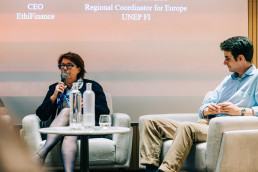

The second panel of the summit explored the complexities, challenges, and opportunities in ESG integration, diving into how businesses can move beyond viewing ESG as a compliance burden. Panelists Sébastien Thevoux Chabuel, Carol Sirou, and Daniel Bouzas shared their views on how regulatory landscapes, data utility, and sector-specific standards are shaping the ESG journey, comparing European and US approaches, and reflecting on the potential for meaningful ESG action over the next few years.
Comparing Regulatory Landscapes
Sébastien set the stage by reflecting on the enthusiastic momentum around ESG before COP26, when regulation wasn’t as prominent a focus. Today, however, with regulations expanding, investors are faced with increasingly complex regulatory landscapes. Sébastien highlighted the differences between Europe and the US, noting that Europe is often criticised for over-regulation, yet paradoxically lags behind the US in enforcement. This disparity, he suggested, creates a challenge for investors, who may struggle with confidence in ESG standards’ efficacy. The need for balanced, enforceable standards that go beyond compliance to drive measurable impact was a recurring theme throughout the discussion.
Navigating the ESG “Teenage Crisis”
Carol offered a compelling analogy, describing the current state of ESG as a “teenage crisis.” She noted that as ESG evolves, businesses need to shift their mindset from viewing compliance as a burden to leveraging ESG metrics to improve overall performance. Carol focused on the complexities of ESG data, where existing quantitative scores often fail to provide actionable insights. This is where the upcoming EU ESG rating system could play a role, enabling more meaningful, comparable assessments of corporate sustainability. Carol also discussed companies’ reluctance to establish ESG benchmarks, noting that fear of scrutiny often holds them back. However, she predicted that with targeted education and a focus on relevant key performance indicators (KPIs), the next 3-5 years would bring real progress in integrating ESG standards that drive results.
Challenges in Implementing ESG Standards
Daniel addressed the varied approaches to ESG within sectors, contrasting the paths taken by companies like Schneider Electric and APB. He explained that while progress on ESG implementation is still emerging, frameworks like the Corporate Finance Disclosure Regulation (CFDR) are instrumental in raising awareness of greenwashing risks. Daniel highlighted Europe’s unique reliance on banks for corporate finance, with 60-70% of companies’ external funding coming from them. This reliance makes sector-specific standards essential, he argued, as they guide both banks and corporations in aligning with ESG goals and fostering comparability. Such standards, Daniel suggested, will play a critical role in ensuring that ESG integration is not just a compliance checkbox but a genuine driver of change across industries.
The Path Forward: Embracing ESG as an Integrated Business Strategy
The panel concluded with a shared outlook on the “teenage crisis” that ESG finds itself in: a phase where rapid growth and complexity require companies to move beyond simple compliance. While regulations will continue to expand, the real task lies in ensuring these frameworks promote proactive, impactful ESG actions.
As Carol, Sébastien, and Daniel all emphasised, the coming years will be critical. Companies must engage with ESG not merely to meet standards but to transform their approach to sustainable performance. For leaders, this means focusing on transparency, harnessing quality data, and establishing relevant, comparable benchmarks to bridge the gap between compliance and performance.
Key Takeaways
- Enforcement vs. Over-Regulation: Europe faces criticism for heavy regulation yet lags behind the US in enforcement, creating challenges for investors seeking efficacy.
- Moving Beyond Compliance: Viewing ESG as a tool for performance improvement rather than a burden will be crucial as regulations increase.
- Sector-Specific Standards: With banking as a major source of external funding in Europe, sector standards are essential for guiding and enabling effective ESG action.
As ESG matures, businesses will need to embrace this “teenage crisis” phase, evolving towards a future where sustainable practices are fully embedded in business strategy, driving long-term value for stakeholders and communities alike.
Creating Value Through ESG: Myth or Reality?




David Pitt-Watson led an insightful panel discussion with Anne Sophie Castelnau, ING, Timothee Mase Dubois, Schneider Electric and Sinthuja Yogarajah, Federated Hermes on integrating ESG (Environmental, Social, and Governance) principles into finance. The panel’s focus was clear: how can ESG drive real value across diverse sectors?
Each speaker brought perspectives from their respective fields—banking, asset management, and electrical equipment manufacturing—illustrating the diverse ways ESG is embedded in different sectors. Timothée Macé Dubois shared that in the electrical equipment sector, companies like Schneider Electric are at the forefront of decarbonisation and energy efficiency. By making sustainability a core pillar, they are setting new standards in responsible manufacturing.
Anne Sophie Castelnau highlighted ING’s approach within the banking industry, noting that sustainability goes hand-in-hand with customer experience. Banks are increasingly financing clients who are transitioning to green practices and consciously avoiding fossil fuel investments. This demonstrates how sustainability can shape lending strategies, driving significant environmental impact.
In asset management, Sinthuja Yogarajah explained the shift from traditional ESG investment to responsible investing. Asset managers are now using active ownership and stewardship to influence company practices, aligning capital with sustainability-focused transitions and promoting long-term change.
Throughout, the panel examined the need for transparency and reliable data to support effective ESG integration. Regulation’s role in guiding sustainable finance was also acknowledged, yet they noted that genuine, hands-on implementation remains the most critical factor for impact.
Key Takeaways
- ESG in electrical equipment centres on decarbonisation and energy efficiency.
- Banks, such as ING, are financing green transitions and shifting away from fossil fuel investments.
- Asset managers are moving towards responsible investing to drive company-level sustainability changes.
The discussion underscored that aligning profitability with sustainability is challenging yet essential. This balance, supported by transparent data and practical actions, is necessary to make ESG integration a meaningful part of financial strategy.

Five Things to Know from ING’s Climate Progress Update 2024
The urgency of climate change is undeniable and ING wants to play a leading role in accelerating the transition to a low-carbon economy.
Today we published our Climate Progress Update 2024 (PDF 13,5 MB) to inform all of our stakeholders about our approach to climate action and how we’re progressing.
1. We’ve taken important steps to improve how we engage with our clients to steer and support their progress in the transition.
We’re working to make a bigger impact through our client engagement. We’ve put a data-driven assessment and decision-making process in place that means a step up in how we advise and support Wholesale Banking clients with sustainable business transformations.
We have developed a tool called ESG.X that has collected publicly disclosed climate data on around 2,000 of our largest clients, including those in the most carbon-intensive sectors. It looks at data including their current emissions, their targets, and whether there are action plans, governance and strategy in place.
We then generate a ‘client transition plan’ score that clearly shows where the client stands on how much they disclose. These scores are now incorporated into our transition risk assessment and transaction approval processes.
We intend to expand the kinds of data we capture through ESG.X, and to make the tooling externally available to help accelerate the efforts of our peers and clients to meet their transition goals.
2. We want to work with our clients on their climate transitions. But if they’re not doing enough and aren’t willing to change, we’ll consider ending our relationship.
Our client engagement starting point continues to be inclusion first, based on the belief that we can make the most impact by financing the technology and solutions for a low-carbon economy. We are here to support clients – including the high emitters – in transitioning their businesses.
We will use the ESG.X tool as part of our client engagement approach to track and assess what clients are disclosing each year. We’ll continue making improvements to the tool to obtain more and higher-quality data.
As of 2026, after two years of disclosure assessments and more strategic engagement with our clients, we’ll have a more robust understanding of how they’re progressing. For those that remain unable or unwilling to progress, we will, on a case-by-case basis, apply stricter credit conditions on the type of business we want to do with these clients, or cease financing them altogether.
3. We’re taking new steps on our energy financing.
As a bank, ING can have the biggest impact by supporting clients with their transitions to net zero while financing the technologies and solutions needed for a sustainable future. This includes limiting financing to activities that emit the most carbon. In this, we follow science and global guidelines, which also consider energy affordability and security.
Over recent years we’ve taken important steps on our oil & gas policy, like no longer financing projects for new oil & gas fields and the infrastructure that supports them; and also deciding to completely phase out financing to upstream oil & gas by 2040.
As of today, we take the next step by stopping all new general financing to pure-play upstream oil & gas companies that continue to open new fields – so, including general corporate financing and bonds.
We also announced a next step on LNG driven by guidance from the International Energy Agency. LNG is natural gas that gets cooled down to liquid to make it easier to transport. We will stop providing new financing for new LNG export terminals after 2025.
4. We’ve expanded our approach to more sectors (again).
Terra is our approach to steer the most carbon-intensive parts of our loan book towards net zero by 2050. This year, eight sectors are (almost) on track to meet climate goals on time, with two sectors behind schedule.
In the past year we’ve expanded our Terra approach to cover aluminium and dairy. We’ve included aluminium because producing it is highly emissions-intensive but it’s fundamental in many decarbonisation technologies, like solar panels, windmills, electric vehicles and batteries. As for the dairy sector, it’s one of the main emitters of greenhouse gases within the food value chain. As a member of the Net Zero Banking Alliance, ING has committed to disclosing our plans for the transition of the agriculture sector, food value chains and aluminium.
5. To successfully fight climate change, action is needed at all levels of society. That’s why advocacy and collaboration are such a big part of our approach.
We want to use our voice and our influence to accelerate progress, share our learnings, and show our actions. This includes sharing what actions we believe governments and policy makers need to prioritise, based on our sector insights. We also want to collaborate with all those who have a role to play, and together with our partners advocate for the change that needs to happen.
We play an active role in climate standard-setting and direct our resources to where our contribution will have the most impact. We’ve collaborated with RMI’s Center for Climate Aligned Finance to help develop methodologies that can be used by financial institutions and sector participants to benchmark their own alignment with net-zero goals.
In addition to contributing to the Poseidon Principles for shipping, the Sustainable STEEL Principles and the Sustainable Aluminum Financing Framework, we’ve recently adopted a new and better methodology for aviation, called the Pegasus Guidelines.
The urgency of climate change is undeniable and ING wants to play a leading role in accelerating the global transition to a low-carbon economy.
As a bank, we do this through financing: working with clients on their transitions to net zero while financing the technologies and solutions needed for a sustainable future. And because the global transition needs to include everyone, we’re also finding new ways to enable people to stay a step ahead on climate change.
As society transitions to a low-carbon economy, so do our clients and so does ING. We finance a lot of sustainable activities, but we finance more that isn’t sustainable. See our Climate Progress Update 2024 for how we’re progressing.
Faith in Finance


In the final SDG Hive session led by Graham Burnside, CO-founder of the UK Islamic Finance Council, experts examined the intersection of Islamic finance and the climate crisis.
Islamic Sustainable Finance Update
Omar Shaikh, Founder, UK Islamic Finance Council began by explaining that over the last few decades, Islamic finance has evolved into a unique, faith-based alternative within the global financial system, guided by ethical principles such as the prohibition of interest and the commitment to do no harm.
Traditionally, the industry has focused on negative screening and alternative products, but there is a growing imperative to address sustainability more proactively. Recent initiatives, including the UK Islamic Finance Council’s global financing task force, aim to embed sustainability into Islamic finance practices. This shift reflects a broader movement towards ethical investing, recognizing the importance of animal welfare, biodiversity, and climate change within investment strategies.
As demand for responsible investing rises, Islamic finance has a significant opportunity to redefine its role by embracing sustainability as a core principle, creating a more inclusive economy that balances profit with environmental and social responsibility.
Jain and Hindu Perspectives
Professor Atul Shah, City University London then delivered a presentation and emphasised the importance of servant leadership in finance. He argued that while finance textbooks often focus on equations, cultural and spiritual dimensions are crucial for understanding finance’s impact. Highlighting the concept of Dharma as the science of sustainable living, they suggested that India’s diverse cultural perspectives on finance could offer valuable insights. This perspective calls for a reevaluation of finance that incorporates values from Dharmic traditions, which emphasize community and shared prosperity, illustrated by cultural practices such as the Jain community’s Chopra Puja ritual, which fosters gratitude and communal harmony.
Christian Perspectives
Robert Burgon, Chair of the Church of Scotland Investors Trust, provided insights into the Trust’s ethical investment strategy, which manages funds for congregations looking to invest surplus money. Established 30 years ago, the Trust excludes sectors like alcohol and tobacco while adhering to ESG principles. He shared the church’s struggles with fossil fuel investments, leading to the decision to divest from oil and gas companies based on investment considerations rather than political pressure. Following this, the church established an Ethical Oversight Committee to ensure that investment practices align with its mission of safeguarding creation. This committee collaborates with organizations like Faith Invest to navigate the complexities of ethical investing, emphasizing responsible stewardship while ensuring returns for investors.
The Role of ESG in Modern Investment
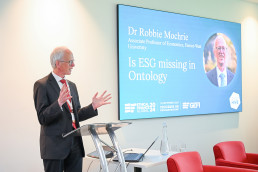
Dr. Robbie Mochrie from Heriot Watt University explored the intersections of philosophy, theology, and investment practices, particularly focusing on ESG (Environmental, Social, and Governance) investing. He framed his remarks around Eastern philosophies emphasizing unity in creation, contrasting them with Western thought, which often separates humanity from nature. By tracing the historical development of Western economic systems, Dr. Mochrie critiqued their often exploitative nature and highlighted the necessity for sustainable and equitable practices. He posited that ESG investing is a modern response that seeks to include considerations for future generations and environmental impacts in financial decision-making. The conclusion underscored the importance of adopting a long-term perspective in ESG, aligning with philosophical and religious traditions that consider broader implications beyond immediate benefits.
These discussions underscore the need for diverse perspectives in shaping a responsible financial landscape that recognizes the interconnectedness of humanity, nature, and future generations. As the conversation around ethical finance evolves, integrating sustainability into investment strategies becomes increasingly crucial.
Sustainable Finance Collaboration Lab
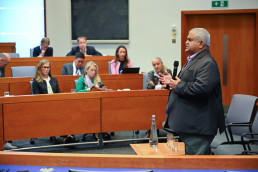

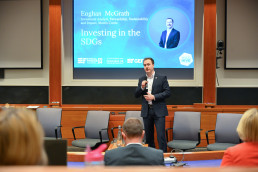

One of the final SDG Hive sessions was delivered in partnership with UN Global Compact Network UK and the Principles for Responsible Investment.
Billy Armstrong, Project Manager of the UN Global Compact Network UK, introduced the Sustainable Finance Collaboration Lab and highlighted the crucial role of businesses in advancing the Sustainable Development Goals (SDGs). As the 2030 deadline looms, the urgency to accelerate progress is intensifying, with recent reports showing that only 17% of the SDGs are on track. This stark reality highlights the need for swift, coordinated action from businesses, governments, and financial institutions to turn the tide.
Billy began by outlining the mission of the UN Global Compact, which is to encourage businesses worldwide to adopt sustainable and socially responsible policies. The Global Compact’s four key focus areas—human rights, environmental sustainability, labour practices, and anti-corruption—are underpinned by the SDGs framework, which serves as a roadmap towards a more sustainable and equitable future. Finance, Billy emphasised, is a critical lever for progress across all 17 SDGs, not only to strengthen financial systems but also to build resilience in an interconnected and increasingly volatile global economy.
As businesses represent around 70% of global GDP, their role in driving the SDGs cannot be overstated. Billy highlighted that finance is not just a tool for growth but a transformative force capable of aligning business practices with the broader goals of sustainable development. He noted that while some progress has been made, the world is still falling behind, and there is an urgent need to channel more financial resources into projects and initiatives that directly contribute to SDG achievement.
Satya Tripathi, former Assistant Secretary-General of the UN, then delivered an opening keynote and underscored the persistent issue of follow-through in international gatherings, particularly at the United Nations (UN). While these convenings aim to foster substantial agreements among member states, the diverse perspectives and expectations of nearly 200 countries often result in vague outcomes that fail to translate into actionable results. This phenomenon is prevalent across various global Initiatives, including the Sustainable Development Goals (SDGs). Satya illustrated the importance of creating effective narratives to mobilize resources and action. For instance, a project in Indonesia secured $400 million for forest conservation without any government funding, demonstrating that private investments can successfully support environmental initiatives when framed effectively. Similarly, in India, a shift toward sustainable farming has begun, funded by the German Development Bank, showcasing the potential of collaborative efforts between the public and private sectors.
Moving forward, there is a call to action to focus on practical solutions that foster local empowerment rather than getting bogged down in financial metrics alone. The ambitious goal of creating 10 million green entrepreneurs exemplifies this vision, aiming to equip communities with the tools and resources necessary to drive sustainable change. By emphasizing collaboration, innovation, and community ownership, the speaker believes that meaningful progress in sustainable finance can be achieved, ultimately leading to positive outcomes for both the environment and local economies.
The panel discussion moderated by Jessica Attard, Deputy Director, Cambridge Institute of Sustainable Leadership covered the role of partnerships in advancing finance for the SDGs. The discussion focused on the challenges of alignment within the financial system, such as misaligned time horizons, risk-reward ratios, and management incentives. Panellists shared examples of initiatives and partnerships aimed at addressing these challenges, including PRI’s collaborative stewardship initiative, capacity-building programs, and engagement with policymakers. The panel also discussed the importance of scaling private finance into emerging markets and addressing the adaptation finance gap. Panellists highlighted the need for capacity building, knowledge sharing, and leveraging partnerships with development banks and other stakeholders to mitigate risks and unlock investment in these regions. The discussion touched on the role of policy and reporting frameworks in promoting positive outcomes and driving systemic change. Panellists shared insights on the challenges of reporting requirements and the need for alignment between corporate positions and lobbying activities. They also discussed the importance of engaging with policymakers to create an enabling environment for sustainable finance and long-term investment.
A key highlight of the session was the interactive collaboration lab, where participants engaged in breakout discussions to share their experiences, challenges, and insights. These discussions fostered a spirit of collaboration, with participants recognising the value of collective action in addressing global issues. By bringing together diverse perspectives, the lab encouraged new ideas and solutions, demonstrating that partnerships are essential for navigating the complex landscape of sustainable development.
With less than six years left until the 2030 deadline, the session underscored that time is of the essence. The financial sector has a unique opportunity to lead the charge, leveraging capital and expertise to create a more sustainable future. By collaborating across sectors and borders, businesses, investors, and governments can ensure that the SDGs are met, securing prosperity for current and future generations.
The session closed with a call to action: finance must be at the forefront of the global effort to achieve the SDGs. The collaboration between the UN Global Compact, GEFI, and PRI serves as a blueprint for how collective action and partnerships can create meaningful impact. The path ahead is challenging, but with finance as a catalyst for change, a sustainable and equitable future is within reach.
696th Lord Mayor Thematic Session
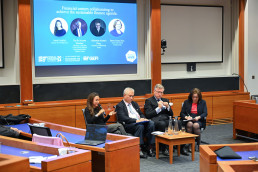



In the penultimate session of this year’s SDG Hive, Dame Susan Rice, Chair of GEFI, moderated a discussion with leaders of global financial centres to discuss collaboration in driving the sustainable finance agenda. The panel featured Alderman Alastair King, Chairman of Naisbitt King Group and the 696th Lord Mayor of the City of London (subject to election); Tan Sri Azman Mokhtar, Chairman of the Leadership Council of the Malaysia International Islamic Finance Centre; and Amal Larhlid, Partner at PwC Middle East.
The conversation emphasised the importance of understanding diverse cultural perspectives and recognising that ethics are dynamic, evolving in response to regional contexts and societal values. Insights from Southeast Asia and the Middle East highlighted how ethical norms differ, with panellists sharing examples of how financial practices align with local traditions. These reflections revealed the complexities of interpreting sustainability and responsibility in a global financial system.
A key theme was the critical role of organisational culture in shaping ethical decision-making within financial institutions. The panel discussed the need to foster a strong ethical culture, using behavioural science and data analytics to ensure that investment decisions prioritise societal impact. They explored practical strategies for assessing and improving ethical practices within institutions, focusing on embedding responsible investment principles.
The discussion also touched on rethinking security concepts, such as energy and climate security, noting that these issues are increasingly intertwined with investment strategies. The panellists stressed the importance of development assistance in conflict prevention, emphasising that financing solutions must address both social and environmental challenges.
The session concluded with a call to action, encouraging greater collaboration between financial centres in the Global North and South. Key takeaways included promoting investments that drive positive social change, fostering open dialogue among stakeholders to reconcile differing ethical perspectives, and examining regulatory frameworks to balance innovation with ethical integrity.
Ultimately, the discussion underscored the need to align financial practices with evolving ethical principles, highlighting the complexities of modern finance while striving for a sustainable future.
Prosperity Without Growth: In conversation with Professor Tim Jackson


In this insightful session, delivered in partnership with the David Hume Institute, Professor Jan Bebbington, Director of the Pentland Centre and The Rubin Chair in Sustainability in Business, led a discussion with economist and author Professor Tim Jackson. The conversation focused on the complex relationship between prosperity, growth, and sustainable development. Professor Tim presented his thesis from his renowned work Prosperity Without Growth, arguing that while endless economic growth is unsustainable due to its environmental consequences, degrowth or a lack of growth could lead to economic instability.
The central dilemma highlighted by Professor Tim is that while economic growth drives public services and technological innovation, it also contributes to environmental degradation. He challenged the traditional focus on GDP and monetary income as measures of success, advocating instead for a broader definition of prosperity—one centred on human well-being, balance, and flourishing within ecological limits.
Key topics covered included the diminishing returns of income on life expectancy, the potential for green growth and low-carbon technologies, and the need for developed nations to address climate debt and support sustainable development in the Global South. Professor Tim acknowledged initial scepticism from developing countries, who viewed the call for sustainability as a way to limit their progress. However, the discussion underscored the importance of balancing growth with environmental responsibility and ensuring prosperity for all.
Professor Tim also critiqued the financial system’s reliance on profit maximisation, proposing reforms to align finance with social and environmental goals. He emphasised the importance of redefining enterprise around service and sustainability rather than growth alone.
The session concluded with a call for Western economies to move away from growth-centric models and learn from diverse global perspectives on prosperity, particularly those rooted in sustainable practices and philosophies.