

Beyond Green: The Real Impact of Biodiversity on Businesses and Banks
Biodiversity loss, the ongoing decline in the variety and abundance of species in ecosystems, has profound direct and indirect impacts on businesses across diverse sectors. These impacts encompass a wide range of economic, regulatory, and reputational factors that affect the operational landscape of businesses globally.
Direct Impacts:
• Supply chain vulnerability: Biodiversity loss can directly jeopardise the stability of supply chains. Industries relying on natural resources, such as agriculture, forestry, and fisheries, may experience disruptions due to the decline of key species. For instance, a reduction in pollinator populations can adversely affect crop yields, directly impacting food and beverage industries.
• Escalating operational costs: The loss of ecosystem services, such as water purification, soil fertility, and pest control, can heighten operational costs for businesses. As these services decline, companies may need to invest in alternative technologies, leading to increased expenditure.
• Regulatory compliance challenges: Biodiversity loss often prompts stricter environmental regulations. Businesses may face challenges in adapting to these evolving regulatory landscapes, requiring investment in new technologies, processes, or compliance measures. Failure to comply can result in penalties and legal repercussions.
• Legal liabilities: Companies engaging in activities contributing to biodiversity loss may encounter legal liabilities. The legal landscape is evolving, with a growing recognition of the need to hold businesses accountable for environmental damage. Lawsuits and fines can have significant financial implications for companies found responsible for biodiversity degradation.
• Reputational and brand risks: The impact of biodiversity loss on a company’s reputation is significant. In an era where consumers and investors often prioritise sustainability, businesses associated with environmental harm may face reputational damage through loss of customer trust, diminished brand value, and difficulties attracting socially responsible investors.
Indirect Impacts:
• Market access and trade challenges: Biodiversity-related concerns can lead to trade barriers and market access challenges. Some countries and trading blocs may impose stringent requirements related to sustainable sourcing and production. Businesses failing to meet these standards may find themselves excluded from certain markets.
• Financial market risks: Biodiversity loss contributes to broader environmental and social challenges, including climate change and social inequality. These issues pose financial risks to businesses, impacting investments, insurance costs, and overall market stability.
• Innovation imperative: Biodiversity loss can stimulate innovation as businesses seek sustainable alternatives. Companies that invest in eco-friendly technologies, green supply chains, and biodiversity conservation initiatives may gain a competitive edge.
• Consumer preferences and loyalty: Changing consumer attitudes towards environmental sustainability drive demand for eco-friendly products and practices. Businesses aligning with these preferences not only attract environmentally conscious consumers but also enhance brand loyalty and customer retention.
• Long-term business resilience: Biodiversity loss poses systemic risks that affect the long-term resilience of businesses. Companies that incorporate biodiversity conservation into their strategies are better positioned to navigate evolving regulatory landscapes, market dynamics, and societal expectations.
It is clear the direct and indirect impacts of biodiversity loss underscore the urgency for businesses to adopt sustainable practices, innovate, and contribute to biodiversity conservation efforts to ensure their long-term viability in a changing global landscape.
Visit Chartered Banker Institutes’s Knowledge Hub for more global insights which affect bankers (and the world) and will signal significant change in the industry.

Bridging Faith and Sustainability: Unlocking Islamic Sustainable Finance
The COP28 marked another milestone in the global effort to combat climate change where countries had committed a climate finance goal of $100 billion annually until 2025. As the finance world continues to focus on sustainability, Islamic finance is emerging as an untapped pool of capital that aligns faith-based finance with environmental, social, and governance (ESG) principles.
The industry which adheres to Islamic law is projected to reach USD6.7 trillion by 2027. Islamic finance prohibits the receipt and payment of “riba” (interest), “gharar” (excessive uncertainty), “maysir” (gambling), short sales, or financing9
2 activities considered harmful to society. As such, Islamic financial institutions are uniquely placed to finance the transition to net zero.
The backdrop to COP28 was a world fighting a climate and nature crisis with a financial system that was not delivering for people and the planet. It has therefore set a pace for the growth of Islamic sustainable finance to fill the gaps in fighting climate and nature crises.
Islamic Sustainable Finance at COP28 and beyond
COP28 saw a greater focus on Islamic finance than previous COPs. As part of the Path to COP28 campaign (the first, and largest finance-focused campaign for the Dubai Climate Summit), DIFC hosted the main (and largest!) event focused on Islamic finance attracting over 200 leaders and practitioners. This was UKIFC’s “Unlocking Islamic Finance at COP28”. It was at the Summit that the Global Islamic Finance & SDGs Taskforce also announced the publication of its Key Outputs Report. It also created a platform to introduce Islamic sustainable investing to the world with the UKIFC launching the Secretariat for Tayyib Inspired.
The Secretariat will manage the Islamic Sustainable Investing Platform (the Platform) which is ‘a listing of independently assessed, validated and showcased Islamic investment products that are directly aligned to sustainability goals’. The concept of “Tayyib” (pure, wholesome, and impactful) in Islam serves as the inspiration and framework for the Platform. It enhances the “halal” paradigm that was effectively established by the early pioneers of Islamic finance and promotes the growth of the Islamic asset management industry. Fundamentally, it aims to represent Shariah compliance in conjunction with a heightened emphasis on active, sustainable—also known as ESG/Responsible—investing within the framework of Islamic principles.
Another notable initiative at COP28 was the Central Bank of the United Arab Emirates, and the Higher Shari’ah Authority, issuing the guiding principles on sustainable Islamic finance. These guidelines aim to incentivise and encourage Islamic financial institutions (IFIs) in the UAE to bolster sustainability within their practices and processes, aligning with a vision that considers both environmental and social dimensions.
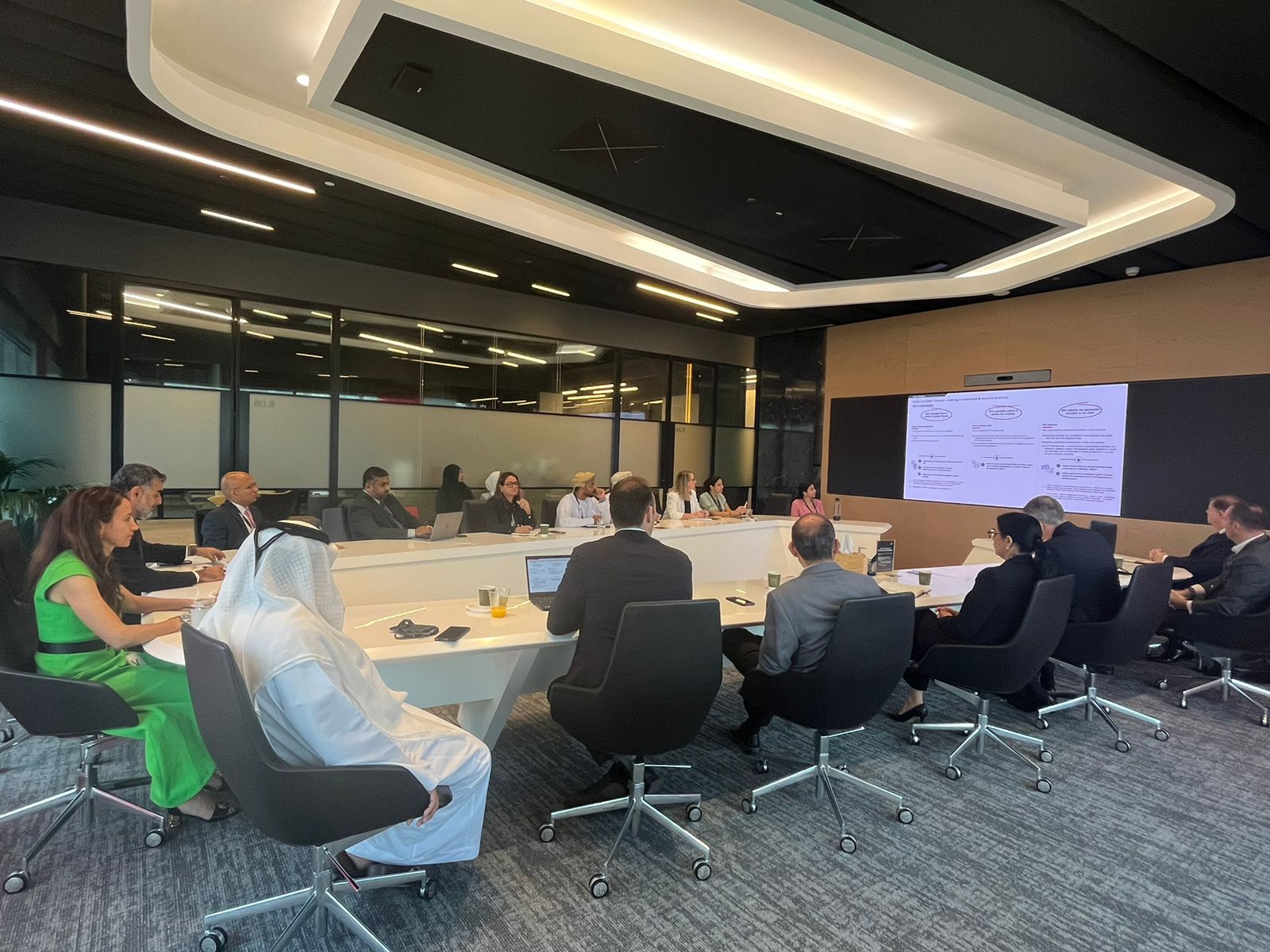
To support this process, the UKIFC held the first Unlocking Islamic Sustainable Finance Roundtable in the UAE on 23 May 2024. The event which was hosted by PwC Middle East brought key stakeholders together to discuss how to build an enabling environment in the UAE for Islamic sustainable finance (ISF). Financial institutions shared steps they were thinking to adhere to the guidelines and where support was needed.

Growth of Green Sukuk
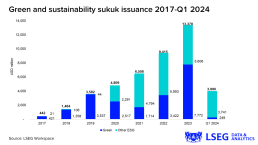
At COP28, the UKIFC and London Stock Exchange Group published the “Financing a Sustainable Future – Green & Sustainability Sukuk Update 2023,” a key outcome of the High-Level Working Group on Green and Sustainability Sukuk (HLWG). The report highlighted that green and sustainability sukuk issuances reached $9.4 billion in 2022 and exceeded the $10 billion mark by the third quarter of 2023.
A notable development at COP28 was the collaboration between the Islamic Development Bank (IsDB), London Stock Exchange Group (LSEG), and International Capital Markets Association (ICMA) to publish a green sukuk practitioners’ guide aligned with the Green Bond Principles and Sustainability Bond Guidelines. The Guidance on Green, Social and Sustainability Sukuk was launched in Saudi Arabia during the 50th Golden Jubilee anniversary of IsDB on 29th April, 2024. It is an output of the HLWG which would support the growth of green and sustainable finance within the sukuk market by providing issuers and market participants with guidance on labeling sukuk as green or sustainable, including examples, case studies, and best practices. It also aims to improve investors’ awareness of sukuk as an asset class in the global fixed-income markets and thereby increasing the market.
2024 saw an increase in sustainable and green Sukuk, with a total issuance of nearly US$ 4.0 billion in Q1 2024, a 17% increase from Q1 2023 which according to LSEG was ‘mostly driven by sustainability Sukuk from GCC banks’. Meanwhile, issuances are expected to be between $160 billion and $170 billion, according to Fitch Rating, which has also forecast that the global Sukuk market will surpass $1 trillion in 2024.
Sustainable Banking Practices
Islamic banks are increasingly incorporating sustainability criteria into their operations and investment decisions, leveraging the principles of risk-sharing, ethical investment, and asset-backed financing to align with environmentally conscious practices. The UKIFC’s 2023 survey of 2,000 banking customers from four continents revealed that 90% of respondents deemed it essential for their bank’s products to be aligned with the Sustainable Development Goals (SDGs).
Leveraging its almost 20 years of experience in Islamic finance and its sister entity Global Ethical Finance Initiative’s expertise in sustainable finance, to accelerate climate action across the global financial services sector. UKIFC is keen to support financial institutions in their journey towards net zero through is advisory services.
Conclusion
As the world transitions towards a cleaner energy future, Islamic finance has an immense opportunity to enable investment consistent with both climate goals and faith-based values. COP28 commitments serve as a launchpad for the Islamic finance industry to scale up sustainable financing and develop innovative solutions for a low-carbon society, taking a substance-over-form approach. With COP29 and COP30 on the horizon, the industry is poised to build on this momentum, further refining and implementing strategies that align Shariah principles with global sustainability targets. The innate wisdom within the concept of sufficiency and principles of stewardship are key contributions the collective faith voice can, and must, make at these forthcoming COPs, helping to shape long-term climate action plans and reinforcing the role of ethical finance in addressing global challenges. This ongoing engagement across successive climate conferences will be crucial in solidifying Islamic finance’s position as a driving force in sustainable development.
This guest blog was written for the GEFI Insights Series by Oyin Bamgbose, Islamic Finance Council UK.

The Role of Finance in Improving Society | Ethical Finance Round Table
GEFI's 32nd Ethical Finance Round Table was hosted by Martin Currie and focussed on the often overlooked ‘s’ in ESG and heard from Lauran Halpin, Martin Currie and Thom Kenrick, NatWest Group.
Ethical Finance Round Table
Based in Edinburgh, the award-winning Ethical Finance Round Table series is the longest-running platform in ethical finance, bringing together the leaders in the field to enable learning and build community. Since establishing the series in 2010, we have seen opportunities flourish amongst the participants in the Round Tables. The Ethical Finance Round Table Series is currently being held virtually.


The session highlighted our host Martin Currie’s approach to responsible investing and NatWest Group’s structured approach to prioritising social issues. With senior representatives from organisations such as Green Investment Group, Mercer, Phoenix Group, Scottish Government, Scottish National Investment Bank, and UNEP FI in attendance, the engaging discussion explored the key social dilemmas, and the utility of the SDGs in finance.
Improving Society
The session opened with a presentation by Lauran Halpin, who offered a comprehensive overview of Martin Currie’s innovative approach to driving impact across its investments. As well as integrating stewardship and sustainability within investment teams, Martin Currie has a focus on SDG alignment and impact. Lauran then went into detail on the Improving Society fund strategy that seeks to generate financial returns at the same time as driving social change by addressing some of today’s most pressing social challenges.
Lauran explained that portfolio companies generally respond positively to KPI expectations as they align with their business goals, and where KPIs are not met, Martin Currie actively engages with them to understand and address any underlying issues while maintaining transparency and consistency in their reporting.
Measuring Impact and Dealing with the Unexpected
Thom Kenrick then provided a banking perspective emphasising the importance of identifying relevant social issues through a structured and scientific approach. NatWest Group, Thom explained, prioritises issues based on regulation, materiality, and real-world impacts, leveraging the UN Principles for Responsible Banking’s impact tool to understand its lending portfolio’s impact on the SDGs. The COVID-19 pandemic, regional conflicts and cost of living crisis were cited as examples of unexpected issues that were not included in the materiality processes but nonetheless consumed significant time and resources.
By proactively addressing emerging social concerns, NatWest Group sets an example for the finance industry and reinforces its position as a trusted partner in building a sustainable future.
Engagement and Social Dilemmas
Following the opening remarks from Lauran and Thom, a wider discussion ensued, exploring the role of finance in society. As noted below gambling, animal welfare, and arms manufacturing emerged as key social challenges for financial institutions:
- In balancing the gambling sector’s revenue of £3.3bn with the issue of 160,000 to 340,000 problem gamblers in England [i], NatWest Group gave the example of its collaboration with GamCare to improve company practices to meet the bank’s criteria.
- While ethical considerations and challenges of balancing necessary animal testing with ethical concerns in investment processes still exists, there was consensus that there is increasing regulatory momentum and client engagement regarding animal welfare, which is influencing investment decisions.
- In addition to the investment challenges and ethical complexities around defence, the fluctuating discourse influenced by geopolitical contexts was highlighted, emphasising the need for consistent, informed discussions to navigate these issues responsibly.
It was apparent from the discussion that addressing such social dilemmas is not easy and it requires financial institutions to navigate complex ethical landscapes.
The Utility of the SDGs
The discussion then moved on to measurement and reporting. The consensus was that evaluating the social impact and performance of companies can be challenging to quantify due to its broad scope. As a universal call to action to end poverty, protect the planet, and ensure that by 2030 all people enjoy peace and prosperity, the spotlight was placed on the UN SDGs.
Whilst it was acknowledged that the SDGs provide a useful framework for global conversations and alignment, it has its limitations. The SDGs do not cover issues such as cancer research, obesity, cultural heritage, indigenous peoples, and animal welfare. They are perceived as being more state-focused, thus necessitating a flexible interpretation for effective private sector engagement in diverse local contexts like addressing child poverty in Scotland.
Private sector involvement is crucial for achieving the SDGs, but efforts need to be scaled up significantly. Current business engagement is limited by geopolitical and economic challenges, with many companies not meeting their SDG commitments [ii]. To address this, actions include standardising corporate accountability measures, leveraging investments in innovation and collaborative platforms, and advocating for supportive policies. Increased accountability, strategic investment, and policy advocacy are essential for amplifying private sector contributions to the SDGs.
Summary
The Round Table provided a collaborative space for experts to discuss the role of finance in driving social change at scale, fostering transparency and accountability in reporting, and the crucial need for increased strategic investment, and policy advocacy to amplify private sector contributions to the SDGs.
The key takeaways from this wide-ranging discussion were:
- Martin Currie’s innovative approach to responsible investing, demonstrates that delivering SDG impact can be profitable.
- NatWest Group’s structured approach to identifying issues and impacts illustrates how proactive engagement with emerging social concerns can position financial institutions as leaders in sustainability.
- The recognition of key social dilemmas for finance such as gambling, animal welfare, and defence present a complex risk challenge to the finance sector.
- The SDGs is a useful global framework, but increased accountability, strategic investment, and policy advocacy is needed to amplify private sector contributions.
If you are interested in the ‘S’ in ESG, Lauran Halpin joined Carmen Cheng, NatWest Group for a discussion on the Just Transition, during London Climate Action Week. The episode is part of the GEFI Insights Series and will be uploaded soon.
Footnotes
GEFI and PwC Middle East host second ESG Majlis Dubai round table
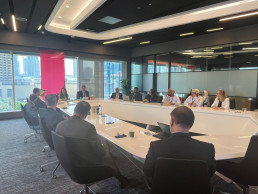
The second ESG Majlis Dubai took place on the 21st May 2024 in partnership with PwC. The session was themed “Decarbonising the Built Environment: the Role of Finance” and heard expert insights from Jonathan Keyes, HSBC and Abdullatif Albitawi, Emirates Green Building Council.
ESG Majlis Dubai
The second ESG Majlis, Dubai took place at the PwC Middle East office in Dubai on Tuesday 21st May 2024 with the discussion focused on the challenges faced in structuring sustainable finance, engaging stakeholders, developing green building projects, and addressing regulatory issues.
The Majlis was attended by senior representatives from Abdulwahab’s Office, Abu Dhabi Commercial Bank, Climate Champions, Commercial Bank of Dubai, Emirates Green Building Council, Emirates NBD Asset Management, HSBC, ING, Marsh McLennan, Mashreq, National Bank of Fujairah, PRI, Scottish Government, and Zurich Insurance.
Key discussion points that were covered during the interactive and dynamic session have been summarised below.


Sustainability and the Built Environment
The discussion opened with a presentation on The UAE Built Environment Blueprint, published in April 2024 by Emirates Green Building Council in partnership with HSBC and the UN Climate Champions, that provided an overview of the sustainable finance report and its assessment of blockers and key levers in the region.
The presentation highlighted the need to address the:
- fragmentation of stakeholders and policy elements in the region
- importance of industry feedback and awareness
- sustainability of the built environment
- and plans for mobilising private sectors and adopting voluntary standards to signal the market.
Attractiveness of Green finance
The attractiveness of green finance quickly emerged as a key issue and included an example of a major developer who highlighted that while accessing finance is not a problem, the additional costs, and complexities of green finance, such as rigorous reporting and certifications, make it less appealing. It was then mentioned that non-financiers often misunderstand products, such as sustainability-linked loans, arguing for a holistic view that considers occupancy and insurance.
There was a view that the finance community needs to streamline green finance processes, making them less burdensome for developers. Measures such as simplifying certification requirements and ensuring financial benefits justify the additional efforts would be welcomed by developers. Overall, the conversation emphasised that making green finance more accessible and attractive requires a collaborative effort to balance profitability with sustainability goals.
Homogenising Criteria and Streamlining KPIs
A comparison of the different global, regional, and local approaches considered the actions being taken to demonstrate to policymakers that the market can support and benefit from more stringent environmental regulations. The discussion considered the following global, regional and local developennts:
- Globally, the “Building Breakthrough” announced at COP28 set a target for buildings to be near zero emissions by 2030, a goal that involves many stakeholders and lacks a clear framework.
- In the MENA region, the Emirates Green Building Council, along with other regional councils, is developing the MENA Zero Framework to guide the decarbonisation of buildings.
- Locally, initiatives like the Blueprint report are encouraging leading developers to set high standards, signalling market readiness for policy changes.
Despite the perception that green buildings are more expensive, it was suggested that this is not always the case. Effective financing and certifications can reduce costs. However, a significant challenge remains in integrating sustainability into traditional finance frameworks. Banks often struggle to recognise local green certifications like Pearl Rating System, compared to international standards like the Leadership in Energy and Environmental Design.
To address this, there is a push to harmonise KPIs and educate financial institutions. Collaboration among developers, banks, and regulatory bodies is crucial to streamline the process and promote sustainable building practices. This collective effort aims to align market readiness with regulatory changes, ensuring the built environment progresses towards greener standards while maintaining financial viability.
Business Case and Building Certification
With projects like Masdar City and ICD Brookfield, leading developers are demonstrating the business benefits of green buildings, proving that sustainability can align with profitability. However, developing the business case for green buildings remains a challenge.
Addressing broken links in the green building sector requires banks to bridge communication gaps between developers, contractors, and material providers. There is a need for systemic incentives to motivate sustainable practices across the entire real estate and construction ecosystem.
Returning to the Blueprint, the discussion then considered the efforts in streamlining the certification processes and enhancing public awareness of sustainability initiatives. Multiple barriers were identified in addressing the lack of uptake in retrofitting loans and green building initiatives, including:
- Low energy costs and insufficient government incentives deter individuals from investing in solar panels
- Regulations across various Emirates also complicate the approval process for such installations
- Landlords often lack motivation to retrofit since tenants bear the energy costs
- The lengthy payback period further discourages investment.
It was concluded that enhanced incentives, clearer regulations, and a stronger business case for sustainability are necessary to drive adoption and that collaboration among stakeholders, including banks and government entities, can help overcome these challenges and promote sustainable practices.
Summary
The second ESG Majlis provided a collaborative space for experts to discuss the challenges in structuring sustainable finance, engaging other banks, developing green building projects, and addressing regulatory issues. The key takeaways from this wide-ranging discussion that we will look to support action on were:
- The need to streamline green finance processes through collaboration to balance profitability with sustainability goals
- A focus on harmonising KPIs and educating financial institutions to promote sustainable building practices
- Influencing decisions in green building projects through finance involvement
- Addressing broken links in the green building sector
- Exploring business cases to motivate investments in sustainability.
Looking ahead, the next ESG Majlis, Dubai round table with PwC Middle East will take place in Q4 2024.
GEFI Insight Series - Climate and Nature Finance: Time for Action
2024 is meant to be the year for international climate finance. It was widely acknowledged that COP28 in Dubai and the Global Stocktake did nowhere near enough on finance – and in particular on the needs of emerging and developing economies (EMDE) – to manage the challenges of climate change mitigation and adaptation, and of the energy transition.
This year’s international negotiations about biodiversity and nature will also highlight finance. A priority for the COP16 on the Convention on Biological Diversity, (CBD), taking place in Colombia in late October, will be monitoring progress on the Global Biodiversity Framework (GBF),i agreed at the previous CBD COP in Montreal, and exploring how public and private finance can be mobilised to deliver on the GBF.ii.
One of the positive developments in Dubai (begun at COP26 in Glasgow, with the declaration on forests and land use) was a coming together of climate and nature agendas.
For example, there was both a Nature, Land Use & Oceans Day as well as a dedicated Food, Agriculture and Water one, at COP28.iii This closer co-ordination supports the views of the climate scientists, who recognised in their last UN assessment report (Sixth Assessment Report [AR6] in 2023iv) the interdependence between the impacts of climate change and the state of biodiversity. The authors commented on “the interdependence of climate, ecosystems and biodiversity, and human societies’”.v vi
These international declarations are important. However, as the climate and nature crises become more acute, policymakers and decision-makers will increasingly be judged on their ability to deliver. Against this background, can 2024 generate a step-change in how international public and private finance address the twin crises?
There are some grounds for optimism. UNFCCC party discussions in Dubai did produced one significant development on finance: that a New Collective Quantified Goal (NCQG) is necessary – to set a new climate finance goal with the provision of an overall framework for existing and new sources of revenue. To drive forward the process, COP29 this November in Baku, was agreed as the time when governments should report back on their finance plans, to contribute to the overall collective goal.
It’s clearly early days for how the NCQG will play out in practice. But it does represent a step-change in ambition – going beyond the previous climate finance floor of $100billion per annum (where we should acknowledge that Global North governments failed) – on financial support for the Paris goals. And it has the potential to do more than that:
- providing a framework for new and innovative sources of revenue, for example, from expanded carbon taxes;
- aligning with the UNFCCC’s core objective of substantially more ambitious new national emissions reduction targets (the NDCs) within the Paris “ratchet cycle” concluding at COP30 in Brazil in 18 months’ time by incorporating the model of country finance platforms which emerged from the recent World Bank/IMF Spring Meetings in Washington DC; and
- it also chimes with the burgeoning climate and development reform agenda being driven by Global South leaders such as President William Ruto of Kenya and Prime MinisterM Mia Mottley of Barbados, prioritising the climate finance policies of the World Bank and the Multilateral Development Banks (MDBs).
For nature and biodiversity finance, the most positive development has been the inclusion of financial responsibilities, targets, and policy alignment in the GBF, adopted in December 2022.
Firstly, target 14 of the framework references the need to integrate biodiversity-related fiscal and financial flows into policies, regulations, planning and processes.vii Secondly, financial institutions, along with transnational companies, are required to monitor, assess, and disclose on biodiversity impacts and dependencies (target 15viii). Some recent environmental regulations have seen the exclusion of financial institutions; not this time. Thirdly, there is a push to reduce harmful incentives, including subsidies, which are damaging to biodiversity.
Target 18 aims for a reduction of at least $500 billion per year by 2030; these incentives are due to be identified next year.ix Finally, target 19 calls for the mobilisation of $200 billion annually for biodiversity by 2030.
In the nearer term, international financial resources from developed countries are slated to reach $20 billion annually by next year and $30 billion by 2030.x
New and innovative sources of finance will be necessary to tackle the crisis in nature. One area where policymakers, in our view, should be working harder – and making common cause on climate and nature finance – is subsidies.
The scale of public money devoted to subsidies for oil, gas and coal remains (for all the rhetoric about reducing them at G7 and other international meetings over the last decade), a staggering $7 trillion, according to latest IMF figures. Alongside this, a 2022 study by The B Team and Business For Nature estimated that at least $520 billion per annum was allocated to subsidise agriculture alone, plus other environmentally harmful subsidies in sectors such as forestry ($155 billion) and fisheries ($50 billion).xi The Paulson Institute valued subsidies harmful to biodiversity at between $274 and $542 billion, in 2019, while positive flows into biodiversity conservation were estimated to be $124 to $143 billion.xii
The UN has the platform to move things forward on subsidies. The CBD later this year is expected to tackle existing subsidies which impact on nature. COP28 in Dubai included language on “phasing out inefficient fossil fuel subsidies” in the GST text, and we would like to see NCQG submissions take the opportunity to pick this language up.
Other ways where climate and nature decision-makers might work together is carbon markets. There is long-established scepticism about the voluntary carbon market, given the lack of international common standards and its association with offsets. Despite this, there would seem to be a push for biodiversity credits which can provide nature-based solutions to emissions reductions; and the CBD in Colombia may make progress with relevant innovative financing instruments.
FinallyFinally, and importantly, the UN climate and biodiversity processes can be mutually supportive for national policies and plans. In a recent high-profile speech in London entitled “Two Years To Save The World”, UNFCCC Executive Secretary Simon Stiell set out what’s at stake – above all, that a step-change in new and ambitious NDCs is essential. This autumn at COP16, governments are expected to submit their own national plans (National Biodiversity Strategy and Action Plans – NBSAPs – the equivalent to climate’s Nationally Determined Contributions – NDCs). To date, seven countries and the EU have submitted NBSAPs.xiii
Our new multi-polar world is in many ways becoming more dangerous, as conflicts around the world are sadly showing. But there is a more positive sign of the times: the leadership from a new generation of leaders in the South, such as William Ruto in , Deputy President of Kenya and
Mia Mottley in, She is the Prime Minister of BarbadosRuto and Mottley, who have been instrumental in promoting a common agenda of climate and development, and driving an overhaul of the IFIs and MDBs that are more in tune with the global challenges of the 21st century. Luiz Inácio Lula da Silva, President of Brazil Lula from Brazil will also play a central role, as Brazil chairs the G20 this year and COP30 in 2025.
In short, this must be the year for transformative change on international climate and nature finance, and which can repair some trust between the North and EMDEs after past failures. As we describe, some of the stars may be aligning. The outcomes of COP16 and COP29 will be the litmus test; and as ever, it will ultimately be political will that counts.
This guest blog was written for the GEFI Insights Series by Richard Folland, Carbon Tracker Initiative, and John Willis, Planet Tracker
Footnotes
i Convention on Biological Diversity – The Kunming-Montreal Global Biodiversity Framework – accessed 30 April 2024
ii Convention on Biological Diversity – COP 16 Colombia – accessed 30 April 2024
iii COP 28 UAE – Thematic Program – accessed 30 April 2024
iv IPCC Sixth Assessment Synthesis Report (AR6) – Climate Change 2023 – accessed 30 April 2024
v IPCC Sixth Assessment Synthesis Report (AR^) – Summary for Policymakers (page 3)
vi Planet Tracker – Nature’s role in a liveable future for all – a commentary on the latest IPCC report – 22 March 2023
vii Convention on Biological Diversity – Global Biodiversity Framework – Target 14
viii Convention on Biological Diversity – Global Biodiversity Framework – Target 15
ix Convention on Biological Diversity – Global Biodiversity Framework – Target 18
x Convention on Biological Diversity – Global Biodiversity Framework – Target 19
xi Business for Nature & The B Team – Financing Our Survival: Building a Nature Positive Economy through Subsidy Reform – February 2022
xii Deutz, A., Heal, G. M., Niu, R., Swanson, E., Townshend, T., Zhu, L., Delmar, A., Meghji, A., Sethi, S. A., and Tobin-de la Puente, J. 2020. Financing Nature: Closing the global biodiversity financing gap. The Paulson Institute, The Nature Conservancy, and the Cornell Atkinson Center for Sustainability.
xiii Convention on Biological Diversity – National Biodiversity Strategies and Actions Plans (NBSAPs) – accessed 30 April 2024
Highlights from Ethical Finance ASEAN 2024: Scaling Up Sustainable Finance

This year’s virtual Summit, delivered in partnership with the Asian Institute of Chartered Bankers and UNEP FI, evaluated the current position and urgent need for scaling up sustainable finance in the ASEAN region.
SCALING UP SUSTAINABLE FINANCE IN ASEAN
Aries Poon (Director, Head of Asia-Pacific Insights and Analysis, S&P Global Market Intelligence) kicked off the summit with a fascinating Economic Outlook for the ASEAN region.
Further setting the scene, Mohammed Rashdan Mohd Yusof (Chairman, Energy Commission Malaysia) delivered the Opening Keynote, entitled Scaling Sustainable Finance in ASEAN. Tuan Rashdan who provided an overview of the current state of sustainable finance in the ASEAN region, highlighted some of the challenges and opportunities in scaling up sustainable finance in the region and outlined the role financial institutions and regulators can play in promoting sustainable finance.
FINANCING THE ENERGY TRANSITION
In a Country Profiles presentation Christopher de Vere Walker (Head of Power, and Utilities at Carbon Tracker Initiative) then shared some insightful data and analysis on the extent to which the power sectors in Indonesia and Vietnam align with the goals of the Paris Agreement, highlighting the risks and opportunities associated with the transition.
The Financing the Energy Transition panel then considered the progress made to unlock investment and mobilise the funding required to successfully transition to cleaner and more sustainable energy sources. The panel was moderated by Dame Susan Rice (Chair, GEFI) and featured Amanah Aboobucker, CB (Chief Sustainability Officer, AmBank Group), Muhammad Rizal Azmi (Assistant Vice President, Business Development and Sales, Carbon Market, Bursa Malaysia Berhad), Martijn Hoogerwerf (Head of Sustainable Finance APAC, ING), and Helga Birgden (Global Head of Responsible Investment, Partner, Mercer).
A SPOTLIGHT ON COP
UN Climate Change High-Level Champion, H.E. Razan Al Mubarak, provided a summary of finance-related outcomes from COP28 and outlined what financial institutions in ASEAN can do to support the transition.
This was followed by a COP Fireside Chat between Sagarika Chatterjee (Department Director, Climate Finance, UN Climate Champions), Azreen Idayu Zainal (General Manager, Sustainability, Securities Commission Malaysia) and Dr John Murton (Senior Advisor, Standard Chartered) who looked at the key COP28 outcomes for ASEAN from a climate finance perspective and expectations for COP29 in Baku.
UNEP FI UPDATE
An update on UNEP FI’s initiatives will then be delivered by Membership and Regional Co-ordination Manager, Maria Eugenia Sosa Taborda.
SUPPORTING SMEs ON THEIR JOURNEY TO NET ZERO
The Fireside on Greening Finance and Developing SME Resilience was moderated by Carl Chan (Director, Accuracy) and included perspectives from Nurul Syaheedah Jes Izman (COO, Pantas Climate Solutions), Moreen Joseph (Chief Sustainability Officer, UOBM, JC3), and Datin Dorph Peng, Deputy President (SME Association of Malaysia). The speakers discussed the extent to which SMEs are incorporating ESG principles in their business operations and highlight some practical actions are being taken by regulators, financial institutions and data providers to support SMEs on their journey’s to net zero.
BEST PRACTICE APPROACHES TO FINANCING NATURE
Candice Dott (Director of Market Engagement, Taskforce for Nature-related Financial Disclosure) provided an introduction to the TNFD recommendations and tools and an overview of TNFD adopters.
Nicole Kozlowski (Head of Engagement, Planet Tracker) then introduced Planet Tracker’s Nature Scorecard and shone a light on the performance of ASEAN corporates
The Unlocking Finance for Nature-Based Solutions panel then reflected on the risks that nature and biodiversity loss pose to ASEAN economies, before covering the global / ASEAN best practice approaches to investing in nature and the latest developments in measurement and reporting. The panel was moderated by Laura Canas da Costa (APAC Policy Lead, UNEP FI) with insights shared by Satya Tripathi (President, Global Alliance for a Sustainable Planet), Andy Turnbull (Senior Investment Manager, Natural Capital, Federated Hermes), Datuk Jeffri Abd Rasid (Chief Executive Officer, Malaysia Forest Fund), and Jurgita Balaisyte (Vice President, APAC ESG & Climate Research, MSCI).
OPPORTUNITIES IN ISLAMIC FINANCE
We had two deep dive fireside chats on Islamic finance. The first, entitled Moving from Halal to Tayyib, heard from Omar Shaikh (Managing Director, GEFI), Shereen Osman (Senior Manager – Islamic Finance, PwC Middle East) and Salman Siddiqui (Investment Manager – Global Emerging Market Equities, Jupiter Asset Management) on the fast emerging Islamic sustainable finance movement.
This was then followed by a second fireside, involving Stella Cox CBE (Managing Director, DDCAP Group), Shrey Kohli (Head of Debt Capital Markets, London Stock Exchange Group), and Raja Amir Shah Raja Azwa (CEO, HSBC Amanah), to discuss the role of Green Sukuk for Climate Action. This included an update on the International Capital Market Association’s practitioner guidelines on green and sustainable sukuk as announced at COP28.
The Summit concluded with a Closing Keynote from Dr Zamir Iqbal (Vice President, Finance, and Chief Financial Officer, Islamic Development Bank), who looked at the role Islamic finance can play to help drive green economic growth in the ASEAN region.