
Mobilising Capital for Climate and Transition Finance - Global Landscape
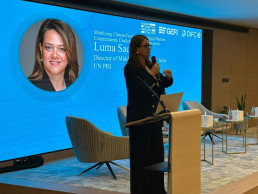
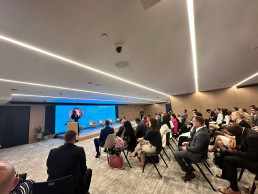
Luma Saqqaf, Director for the Middle East, Africa, and India at the Principles for Responsible Investment (PRI), delivered a deeply informed keynote addressing the challenges of financing climate action in emerging markets as. Her remarks painted a detailed picture of the immense financing gap that stands between ambitious climate targets and the reality on the ground.
Luma cited the High-Level Experts Group on Climate Finance’s staggering estimate of $6.7 trillion needed annually to advance global climate action—of which emerging markets alone require $2.4 trillion. Yet, current climate finance flows fall far short, hovering around $1.5 trillion globally, with a mere 15% reaching emerging markets. She emphasised that this shortfall is particularly worrisome given that these regions are poised to produce half of global emissions by 2030.
The challenges are manifold. Emerging markets often struggle with creditworthiness, limited budgets, and insufficient sustainability maturity, complicating access to crucial climate funds. Luma underscored that many countries cannot meet their climate commitments without external support—Egypt’s need for $264 billion to achieve its 2030 targets in just three sectors is a telling example. Clarity around new climate goals (NCQG) and the respective responsibilities of developed and developing nations remains elusive, further hindering progress.
Nonetheless, Luma spotlighted promising initiatives: Just Energy Transition Partnerships, the WAFI platform in Egypt, and growing momentum in sustainable agriculture and land restoration. She stressed that bridging the gap requires more than just capital—it demands impact-focused investing and reconciling fiduciary duties with meaningful environmental and social outcomes. Capacity building, both at institutional and governmental levels, is central to enabling strategic planning, effective disclosures, and robust project pipelines.
Concluding on a measured but hopeful note, Luma acknowledged that while scaling up climate finance for emerging markets is no small feat, dedicated collaboration and a whole-of-government approach can make a transformative difference. Her keynote served as a call to action, urging stakeholders to not only recognise the magnitude of the challenge but also to commit to the practical steps needed to drive lasting, equitable climate solutions.

Sustainable Finance in the UAE 12 months Post COP28
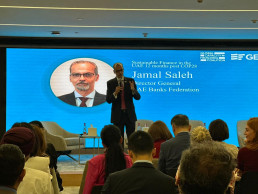
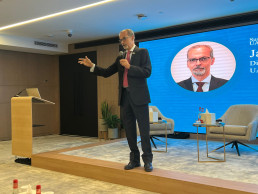
The Global Capacity Building Coalition (GCBC)’s inaugural Forum took a significant turn towards practical progress as Jamal Saleh, Director-General of the UAE Banks Federation, shared an insightful overview of sustainable finance advancements in the UAE over the past year. Representing all banks in the country, the federation’s collective efforts have centered on translating ambitious climate pledges into tangible market shifts.
One of the most notable commitments was the UAE banks’ pledge at COP28 to mobilise over $1 trillion in sustainable financing by 2030—a target Jamal proudly noted they are on track to meet, potentially even ahead of schedule. He underlined the importance of establishing a common definition of sustainable finance at the outset, ensuring a shared understanding across all institutions. This foundational step paved the way for the development of a monthly dashboard to monitor sustainable financing performance, enhancing transparency and accountability for member banks.
Jamal emphasised that transforming the market involves more than just allocating capital to green projects. The federation set out rules for banks to operate more sustainably, not only in their own practices but also through their relationships with customers and suppliers. This holistic approach is guiding the industry toward comprehensive ESG integration, moving beyond the confines of “green finance” to embed sustainability across environmental, social, and governance dimensions.
To support SMEs, the federation is building an end-to-end ecosystem of incentives, equipping smaller enterprises to align with ESG objectives and benefit from the evolving sustainable finance landscape. Harmonising understanding, shaping the right regulatory environment, and ensuring robust capacity building were underscored as key to sustaining this momentum.
Jamal’s keynote effectively highlighted the UAE’s unwavering commitment to scaling sustainable finance. By fostering shared definitions, enhanced oversight, and ecosystem-wide engagement, the federation is setting a strong precedent for how financial institutions can lead the way in driving transformative change.
Opening Remarks
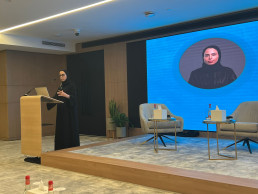
Alia Al Zarouni, Chief Operating Officer of the Dubai International Financial Centre (DIFC), welcomed attendees at the Climate Finance Capacity Building Forum. She expressed gratitude to the partners—the Global Capacity Building Coalition (GCBC) and the Global Ethical Finance Initiative (GEFI)—for co-hosting the event, emphasising the importance of collaborative efforts to shape a resilient and sustainable financial ecosystem.
Alia outlined the DIFC’s significant strides in fostering sustainable finance, highlighting two cornerstone initiatives: the Dubai Sustainable Finance Working Group and the DIFC Sustainable Finance Catalyst. Together, these initiatives provide a comprehensive framework aimed at strengthening the sustainability ecosystem both locally and globally. The Sustainable Finance Catalyst’s ambition to support the capacity building of 1 million sustainability leaders by 2030 underscored her belief that investing in human capital is essential for driving meaningful, long-term change.
She also spotlighted the Dubai Sustainable Finance Working Group’s role in rallying over 40 member organisations to create practical solutions for mobilising capital, de-risking investments, and supporting sustainable economic growth. Another pivotal commitment—the DIFC’s decarbonisation strategy—aims to achieve net-zero emissions by 2045, outpacing national targets and signaling the region’s determined stance on climate action.
In closing, Alia expressed confidence that the forum would shed light on the critical capacity gaps and investment barriers hindering climate finance, particularly in emerging markets. Her remarks set the stage for the day’s discussions, reinforcing DIFC’s dedication to nurturing a financial environment where innovation, knowledge-sharing, and targeted capacity building can accelerate sustainable finance and climate resilience worldwide.
COP28 LEGACY ANNOUNCEMENT
Pioneering Islamic Sustainable Finance Initiative launched at GCBC Capacity-Building Forum in Dubai
Dubai, UAE – 9th Dec, Global Ethical Finance Initiative (GEFI), Islamic Finance Council UK (UKIFC) and HSBC Bank Middle East have come together today to launch a new 1-year partnership to cultivate a purpose-driven Islamic finance ecosystem that can increase sustainable finance flows at scale.
Against the backdrop of UAE Banks Federation’s COP28 pledge of over AED 1 trillion in sustainable finance by 2030 and DIFC’s Sustainable Finance Catalyst commitment to scale future capacity by training 1 million sustainability leaders by the same year, the Islamic Sustainable Finance Initiative (ISFI) aims to accelerate Islamic finance’s role in achieving sustainable development goals, with a focus on creating systemic change through awareness, capacity building, and engagement across the Middle East, North Africa, and Turkey (MENAT) region.
Having recognised the shared principles of ethical investing and societal responsibility, GEFI and UKIFC have been working collaboratively for several years to integrate Islamic finance into mainstream sustainable finance. The ISFI will build on GEFI / UKIFC’s previous work with a structured programme focused on:
- Market Awareness & Engagement – round tables and conferences
- Capacity Building – a structured CPD-accredited training course covering both sustainable finance and Islamic sustainable finance
- Knowledge Hub & Portal – Repository of guidance, best practices, and resources including toolkits
- Retail survey – focusing on GCC consumers, the survey will look to capture understanding and appetite towards sustainability linked products.
HSBC has been a leader in integrating sustainability with Islamic finance, pioneering initiatives such as sustainable sukuk offerings and ESG-linked Islamic structures to support environmentally and socially responsible investments in line with Islamic principles of ethical financing. With its support of the ISFI, through philanthropic funding, HSBC Bank Middle East is demonstrating its commitment to supporting the development of sustainable finance infrastructure in the middle east.
The ISFI also aligns with the UAE Central Bank’s vision, as set out at COP28, for Islamic finance to be a beacon of sustainable finance in the region.
The announcement was made during the Global Capacity Building Coalition’s (GCBC) inaugural Climate Finance Capacity Building Forum, delivered in partnership with GEFI and DIFC, with support from UAE Banks Federation and CISI. The Forum provided practical advice and guidance on building the capacity required to align financial flows with long-term climate goals and accelerate the journey to net zero.
With its leadership in green finance, commitment to sustainable development, established position as a global hub for Islamic finance, and supportive strategic government policies and financial infrastructure, the UAE is well placed to host the regional Islamic Sustainable Finance Initiative.
Omar Shaikh, Managing Director, GEFI
“Our collaboration with HSBC represents a pivotal step towards integrating Islamic finance with global sustainability efforts. By leveraging our shared resources and expertise, we are poised to make substantial contributions to sustainable development in the MENAT region.”
Simon Thompson, Managing Director, Global Capacity Building Coalition
“Islamic sustainable finance has a key role to play in helping countries, companies and communities achieve the objectives of the Paris Agreement and the UN Sustainable Development Goals, especially in emerging markets and developing economies. I warmly welcome this innovative partnership between GEFI, UKIFC and HSBC Middle East with its focus on capacity-building; developing the capabilities of Islamic financial institutions, and the expertise and skills of Islamic finance professionals, to align with global best practice.”
Framing Islamic Sustainable Finance
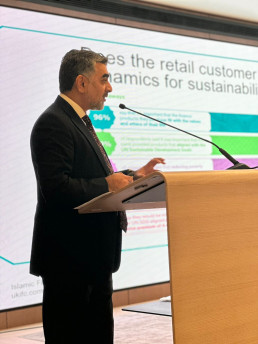
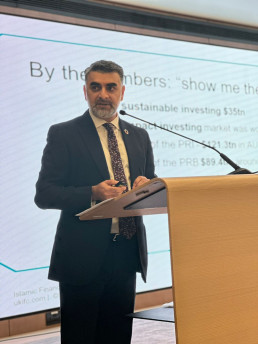
Omar Shaikh, Managing Director of the Global Ethical Finance Initiative (GEFI), delivered a compelling presentation on the pivotal role of Islamic finance in advancing global sustainability goals. He began by outlining GEFI’s mission to build sustainable finance ecosystems through advocacy and solutions, emphasizing the importance of private sector engagement in driving meaningful change.
Omar highlighted how events like the global financial crisis and the climate crisis have reshaped the narrative around finance, leading to concepts like profit with purpose and stakeholder capitalism. He pointed out that while Islamic finance is inherently ethical—avoiding investments in harmful sectors—there is a significant opportunity to deepen its impact on sustainability issues such as climate change and social justice.
Central to his message was the shift from focusing solely on what is permissible (halal) to embracing what is wholesome and good (tayyib). This transition involves not just avoiding harm but actively promoting environmental stewardship and social well-being, aligning with the ethical and spiritual dimensions of Islamic principles.
Omar also addressed unique features of Islamic finance that can enhance sustainable finance, such as the prohibition of speculative financial instruments and the integration of spiritual values like baraka (blessings). He acknowledged challenges within the industry, including the need for greater authenticity and alignment with the spirit of Shariah law.
In closing, Omar emphasized the substantial market opportunity. If just 5% of the projected $8 trillion Islamic finance market by 2030 is dedicated to sustainable finance, it would represent a $400 billion opportunity. He called for collaborative efforts among regulators, industry players, and grassroots organizations to unlock the full potential of Islamic sustainable finance.
Key Takeaways:
- Opportunity for Growth: Islamic finance can significantly contribute to global sustainability by moving beyond compliance to proactive impact.
- Shift in Mindset: Embracing the concept of tayyib encourages a deeper commitment to environmental and social responsibility.
- Market Potential: Aligning Islamic finance with sustainability principles presents a substantial economic opportunity, benefiting both the industry and global efforts to address climate challenges.
Islamic Finance and Renewable Energy
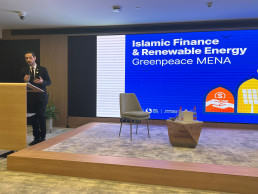
Tariq Al-Olaimy, Advisor to the Ummah for Earth Alliance with Greenpeace, delivered an insightful presentation on the critical role Islamic finance can play in advancing renewable energy investments. He highlighted that the Islamic finance industry, managing $4.5 trillion in assets, has the potential to unlock $400 billion for climate finance by 2030 by allocating just 5% of its assets to renewable projects.
Tariq emphasized the significant growth in ESG Sukuk markets and the expansion of renewable energy capacity in countries like Saudi Arabia and the UAE, demonstrating the sector’s momentum. He showcased case studies such as the Saudi Electricity Company’s green Sukuk and Indonesia’s sovereign green Sukuk program, which have resulted in substantial environmental and social impacts.
To provide a practical roadmap, Tariq introduced the “EDUCATE” framework for Islamic finance institutions:
- Engage: Connect financiers with renewable energy developers.
- Disseminate: Share success stories and best practices.
- Unlock: Position Islamic finance as a preferred source for renewable projects.
- Collaborate: Work across sectors to amplify impact.
- Advocate: Push for supportive policies and regulations.
- Take Action: Implement tangible measures towards sustainability.
- Evaluate: Assess outcomes based on Islamic principles.
In closing, Tariq stressed the necessity for Islamic finance institutions to establish sustainability infrastructures, set clear green financing targets, and innovate with new financial products. He affirmed that by aligning financial practices with environmental stewardship, Islamic finance can significantly contribute to global climate solutions.
Key Takeaways:
- Islamic finance can unlock $400 billion for climate finance by 2030.
- Growth in green Sukuk reflects increasing investor interest in sustainability.
- The “EDUCATE” framework offers actionable steps for engagement.
- Innovation and collaboration are vital to meet sustainability goals.
Tariq’s session highlighted the immense potential of Islamic finance to drive renewable energy investments and address climate challenges. By integrating sustainability into financial strategies, Islamic finance institutions can play a pivotal role in fostering a sustainable and resilient future.
Innovative Islamic Sustainable Finance Products: Green & Sustainable Sukuk
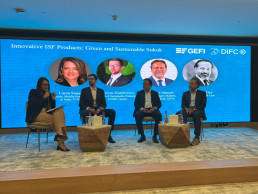
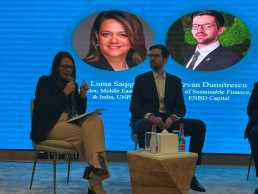
A dynamic panel comprising Razvan Dumitrescu (ENBD Capital), Debashis Dey (White & Case), and Basheer Ahmad (DFSA), moderated by Luma Saqqaf (PRI), delved into the opportunities and challenges of the green and sustainable Sukuk market.
The discussion highlighted the UAE’s leadership in sustainable Sukuk issuances, with the DIFC hosting a significant portion of global activity. Razvan Dumitrescu noted that regulatory initiatives like the UAE Central Bank’s sustainable finance guidelines have been pivotal catalysts.
Debashis Dey pointed out that while investor demand for green and sustainable Sukuk is growing, supply remains constrained. Limited offerings and a need for greater capacity building and awareness are hurdles that the industry must overcome to meet investor appetite.
From a regulatory perspective, Basheer Ahmad emphasized the role of authorities in fostering market growth. He mentioned that while the DFSA currently defers to issuers’ Sharia governance, there is potential for more proactive measures, including incentives, to stimulate the market.
The panel agreed that Islamic finance’s foundational principles of “do no harm” align naturally with sustainability goals. However, the industry needs to move beyond mere compliance to actively focus on creating positive environmental and social impact.
Key Takeaways:
- UAE’s Leadership: The UAE is at the forefront of sustainable Sukuk issuances, driven by supportive regulatory frameworks.
- Supply-Demand Gap: Growing investor demand contrasts with limited supply, highlighting the need for more issuances and product innovation.
- Regulatory Support: Enhanced collaboration between regulators and industry players can help unlock the market’s potential.
- Ethical Alignment: Islamic finance principles align with sustainability, but a shift towards proactive impact is necessary.
The panel underscored the significant potential for Islamic finance to drive sustainable investment. Realizing this potential requires collective efforts from industry practitioners, regulators, and other stakeholders to foster innovation, expand offerings, and educate market participants.
Green and Sustainability Sukuk Report 2024: Crossing Borders
Tayyab Ahmed, Head of Research for Islamic Finance at the London Stock Exchange Group (LSEG) Data and Analytics, presented valuable insights from the “Green and Sustainability Sukuk 2024: Crossing Borders” report. He highlighted the rapid growth of the green and sustainability Sukuk market, the evolving regulatory landscape, and the steps needed to scale the market further.
One of the key highlights Tayyab mentioned is the impressive growth in the issuance of green and sustainability Sukuk, which reached $11 billion by the third quarter of 2024. This marks a significant rise since the market’s inception in 2017, indicating strong momentum. Despite this growth, green and sustainability Sukuk still represent a small fraction of total ESG bonds and Sukuk issuance, suggesting substantial room for expansion.
Tayyab pointed out that while demand is increasing—with 55% of investors planning to invest in green and sustainability Sukuk in the next three years—there are supply-side challenges. Nearly 45% of investors cite limited offerings as a key obstacle, and 60% have only a basic understanding of Sukuk and sustainability principles. This underscores the need for capacity building and greater awareness to bridge the knowledge gap and expand the market.
To address these challenges, Tayyab called for promoting common regional and international standards, building capacity within the market, and expanding the investor base beyond traditional Sukuk investors. He emphasized that supportive regulatory frameworks and taxonomies in countries like Malaysia, Indonesia, and the UAE are crucial in fostering the growth of the green Sukuk market.
In his closing remarks, Tayyab highlighted that achieving significant growth in the green and sustainability Sukuk market is a collective effort. By enhancing market depth through innovation and education, and leveraging supportive regulatory environments, the industry can move towards raising annual issuance from $30 billion to $50 billion, contributing meaningfully to global sustainable finance objectives.
Key Takeaways:
- The green and sustainability Sukuk market is rapidly growing but remains a small fraction of total ESG issuance.
- Increasing investor demand exists, but supply limitations and knowledge gaps need to be addressed.
- Capacity building, common standards, and expanding the investor base are essential for scaling the market.
Tayyab’s presentation underscores the significant potential of green and sustainability Sukuk in bridging the financing gap for sustainable development. By addressing current challenges and leveraging opportunities, the Islamic finance industry can play a pivotal role in advancing global sustainability goals.
Synergies Between Islamic Finance and Sustainable Finance
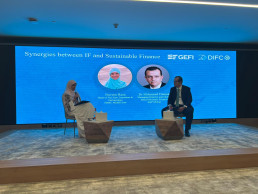
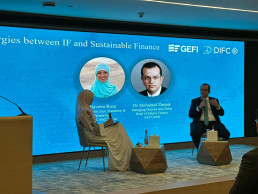
In a thought-provoking fireside chat, Dr. Mohammed Damak highlighted how the core principles of Islamic finance inherently support sustainable development. He noted that Islamic finance prohibits interest, avoids investment in illicit sectors, emphasizes profit and loss sharing, and promotes ethical and responsible finance deeply integrated into the local economy.
Dr. Damak shared that the Islamic finance industry, excluding Iran, currently stands at $3.3 trillion and has been growing at double-digit rates for the past 20 years. This growth is expected to continue, especially in regions like the GCC and Malaysia. He observed a rising interest among younger generations in both Islamic finance and sustainable finance, indicating a promising future as these sectors converge.
A key point discussed was the growth of the sustainable Sukuk market, which has expanded from zero to over $10 billion in issuance within five years. Dr. Damak emphasized that sustainable Sukuk appeal to a broader investor base, including those focused on sustainability, thereby increasing investment opportunities.
However, he identified challenges that need to be addressed to fully unlock the potential of Islamic sustainable finance. Simplifying the Sukuk issuance process is paramount. Currently, issuing Sukuk can be more complex than issuing conventional bonds, potentially deterring issuers. Streamlining this process could make Sukuk more appealing, especially for smaller issuers like SMEs.
Dr. Damak also touched on the importance of collaboration among regulators, standard-setters, and industry stakeholders to drive growth. He suggested that the future of Islamic finance will be not only sustainable but also digital, with technological advancements like tokenization and digital platforms making Sukuk issuance more accessible and efficient.
Key Takeaways:
- Inherent Alignment: Islamic finance principles naturally align with sustainability goals, providing a strong foundation for growth in Islamic sustainable finance.
- Market Growth: The sustainable Sukuk market is rapidly expanding, offering significant opportunities for issuers and investors.
- Simplification Needed: Streamlining the Sukuk issuance process is critical to making Islamic financial instruments more accessible and attractive.
- Future Outlook: Collaboration and digitalization are key to unlocking the full potential of Islamic finance in contributing to global sustainable development.
By distilling these insights, the discussion underscored the vital role Islamic finance can play in addressing global sustainability challenges, provided that industry stakeholders work together to overcome existing hurdles.
Building Green Islamic Portfolios: Integrating Sustainability into Islamic Finance
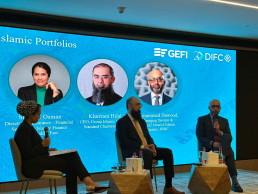
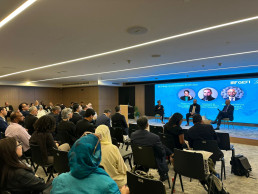
The second fireside chat moderated by Shereen Osman of PwC Middle East brought to light the unique opportunities and challenges in building green Islamic portfolios. The discussion featured insights from Khurram Hilal of Standard Chartered and Mohammed Dawood of HSBC, both leaders in the field of Islamic and sustainable finance.
Aligning Islamic Finance with ESG Goals
Mohammed Dawood emphasized that the principles of Islamic finance naturally align with Environmental, Social, and Governance (ESG) objectives. He highlighted HSBC’s pioneering efforts in issuing green Sukuk since 2018, underscoring the bank’s commitment to sustainability. Dawood stressed that Islamic finance should play a leading role in financing real economy and infrastructure projects, leveraging its ethical foundations to drive sustainable development.
He also pointed out the importance of industry bodies in setting standards and providing direction. “Building capacity and thought leadership within the industry is crucial,” Dawood remarked. He called for greater collaboration among financial institutions to expand the impact of Islamic sustainable finance.
Standard Chartered’s Approach to Sustainable Islamic Finance
Khurram Hilal shared how Standard Chartered is integrating sustainability into its Islamic finance offerings. He noted that the “do no harm” ethos inherent in Islamic finance is intrinsically connected to ethical and sustainable practices. Hilal highlighted the growing interest from clients, especially younger generations, in products that combine Islamic and sustainable finance principles.
Standard Chartered’s global commitment to sustainability includes the Global Islamic Finance Program (GIFP), an initiative aimed at incubating sustainable projects. Hilal emphasized the need for both institutional support and customer demand to drive the industry forward. “It’s about creating a push and pull effect,” he said, “where institutions offer sustainable products, and customers actively seek them.”
Challenges and the Role of Regulators
Both speakers acknowledged challenges in aligning Islamic finance with sustainability goals. A significant hurdle is the need for more talent and expertise in this niche field. They also discussed the critical role of regulators and industry bodies in promoting sustainable Islamic finance. Proactive government initiatives, such as those associated with COP28 in the UAE, are seen as positive steps toward fostering growth.
“Building trust and credibility is essential,” Dawood stated. Hilal agreed, adding that transparency and clear standards are vital for the industry’s advancement. They highlighted that while progress is being made, there is still much work to be done to fully integrate sustainability into Islamic finance practices.
The Path Forward: Islamic Finance Leading in Sustainability
The discussion concluded with a shared vision for Islamic finance to take a leading role in global sustainability efforts. Both Dawood and Hilal called for the industry to increase its share beyond the current 5% of sustainable finance. By leveraging its ethical principles and focusing on financing projects that have tangible environmental and social benefits, Islamic finance can significantly contribute to addressing global challenges.
“Islamic finance has the potential to be a powerful force for good,” Hilal asserted. Dawood echoed this sentiment, emphasizing that collaboration and innovation are key to unlocking this potential.
Key Takeaways
- Natural Alignment: Islamic finance principles inherently support ESG and sustainability goals.
- Industry Leadership: Banks like HSBC and Standard Chartered are pioneering efforts to integrate sustainability into Islamic finance.
- Collaborative Effort: Building green Islamic portfolios requires collaboration among institutions, regulators, and customers.
- Challenges Ahead: Talent gaps and the need for clear standards are hurdles that must be addressed.
- Future Potential: With proactive efforts, Islamic finance can lead in financing sustainable projects, amplifying its impact on global sustainability.