
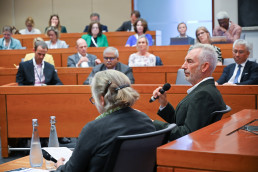
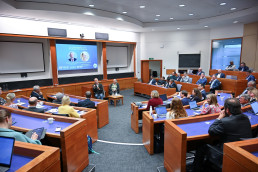
In this insightful session, delivered in partnership with the David Hume Institute, Professor Jan Bebbington, Director of the Pentland Centre and The Rubin Chair in Sustainability in Business, led a discussion with economist and author Professor Tim Jackson. The conversation focused on the complex relationship between prosperity, growth, and sustainable development. Professor Tim presented his thesis from his renowned work Prosperity Without Growth, arguing that while endless economic growth is unsustainable due to its environmental consequences, degrowth or a lack of growth could lead to economic instability.
The central dilemma highlighted by Professor Tim is that while economic growth drives public services and technological innovation, it also contributes to environmental degradation. He challenged the traditional focus on GDP and monetary income as measures of success, advocating instead for a broader definition of prosperity—one centred on human well-being, balance, and flourishing within ecological limits.
Key topics covered included the diminishing returns of income on life expectancy, the potential for green growth and low-carbon technologies, and the need for developed nations to address climate debt and support sustainable development in the Global South. Professor Tim acknowledged initial scepticism from developing countries, who viewed the call for sustainability as a way to limit their progress. However, the discussion underscored the importance of balancing growth with environmental responsibility and ensuring prosperity for all.
Professor Tim also critiqued the financial system’s reliance on profit maximisation, proposing reforms to align finance with social and environmental goals. He emphasised the importance of redefining enterprise around service and sustainability rather than growth alone.
The session concluded with a call for Western economies to move away from growth-centric models and learn from diverse global perspectives on prosperity, particularly those rooted in sustainable practices and philosophies.