
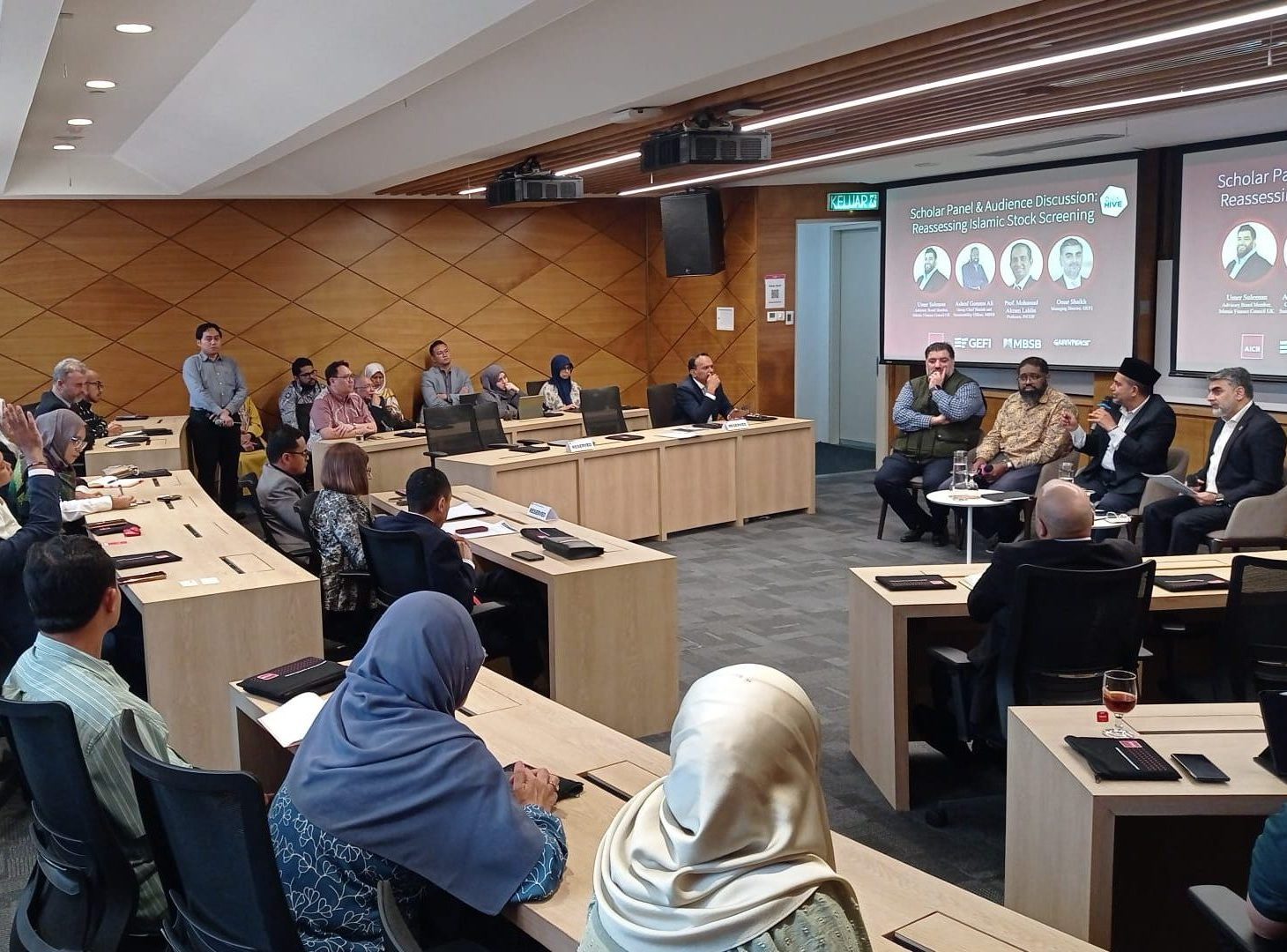
On Thursday 5th February 2026, alongside Ethical Finance ASEAN 2026, senior practitioners, scholars and policymakers gathered at the Asian Institute of Chartered Bankers (AICB) in Kuala Lumpur for the first SDG Hive session: Unlocking Islamic Sustainable Finance
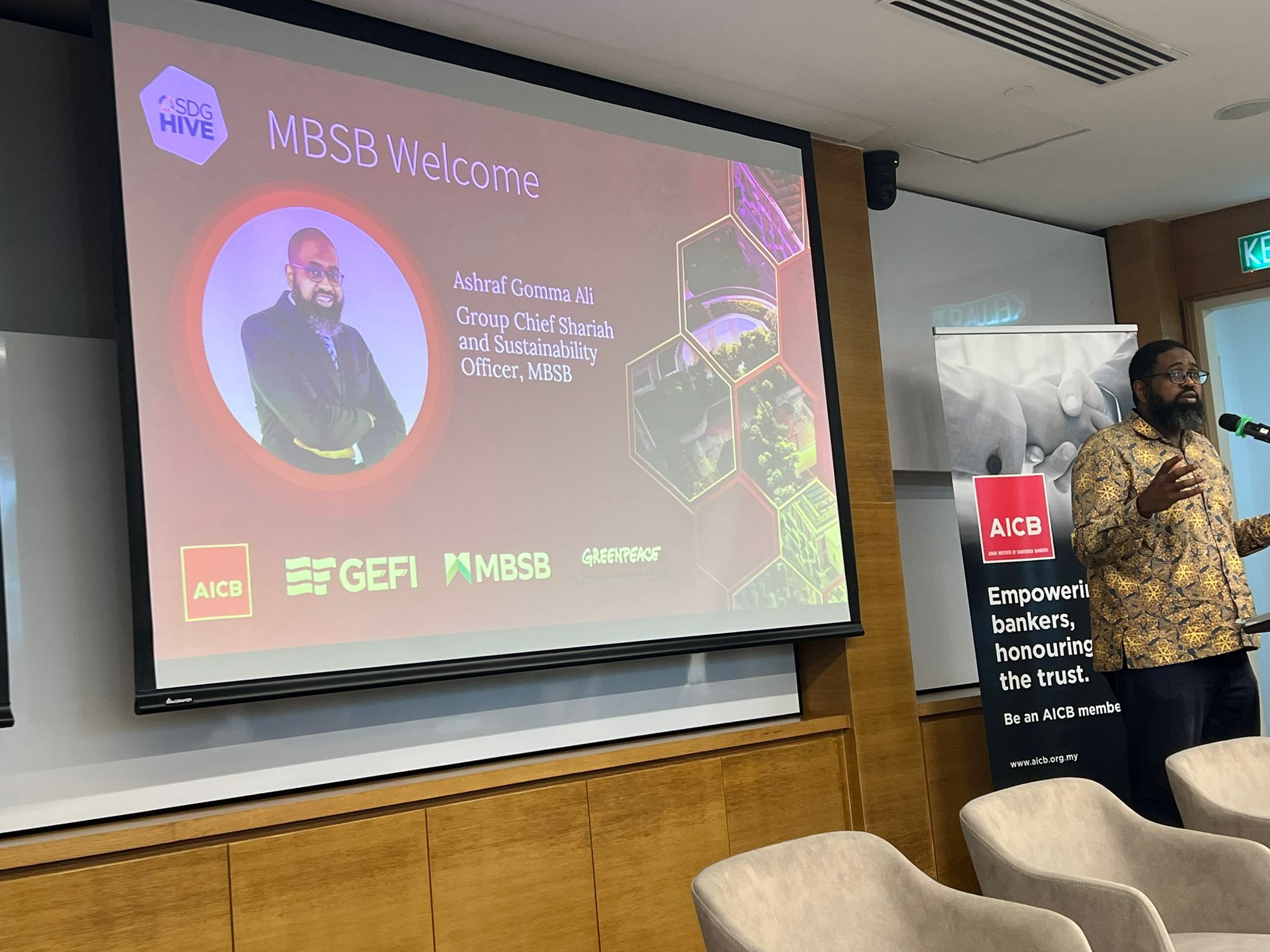
Participants were welcomed by Ashraf Gomma Ali, Group Chief Shariah and Sustainability Officer at MBSB, and Shireen Kandiah, Director of Sustainability, Marketing and Communications at AICB, setting the tone for an interactive, debate-style session focused not on theory, but on market reality.
The central question was clear: how can Islamic finance move beyond compliance-based screening toward a more holistic, impact-driven approach anchored in Maqasid al-Shariah and the principles of tayyib, purity, responsibility, and societal wellbeing?
The Maqasid Journey So Far
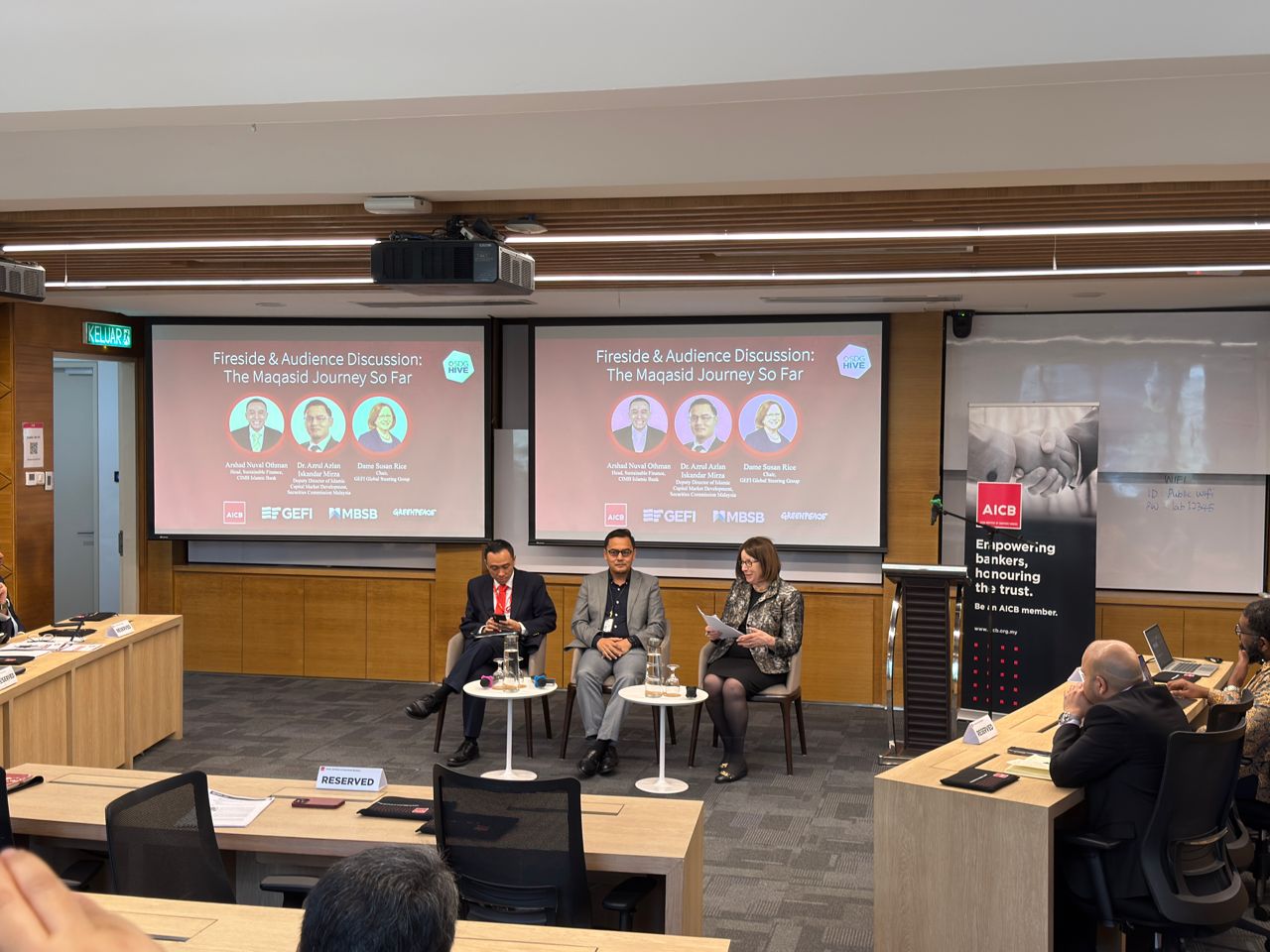
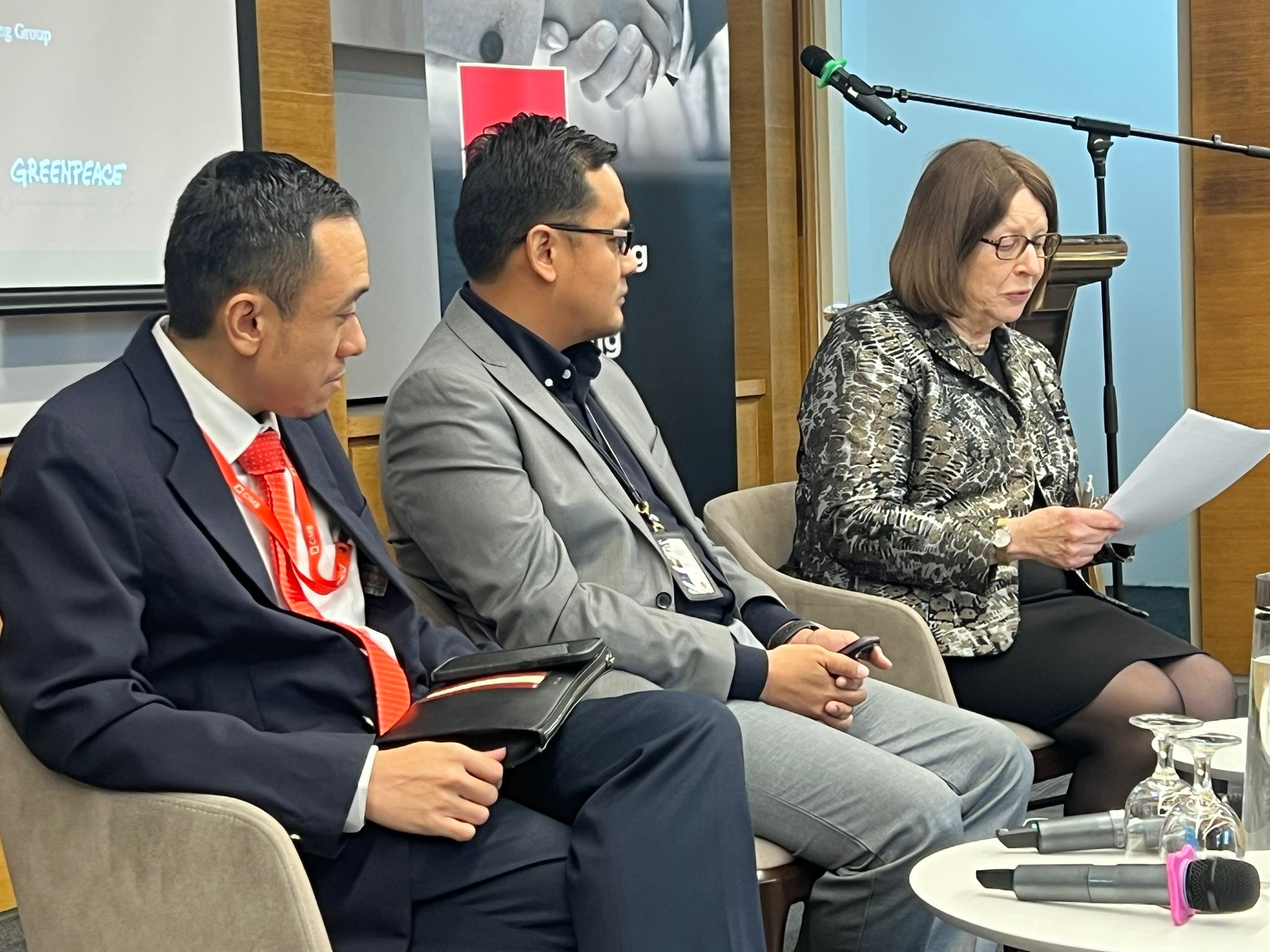
The opening fireside discussion, moderated by Dame Susan Rice, Chair of GEFI, explored how Malaysia’s Maqasid-aligned guidelines have begun shifting the conversation from form to purpose.
Dr Azrul Azlan Iskandar Mirza of the Securities Commission Malaysia reflected on the intent behind the guidelines: to embed Maqasid not as a marketing label, but as a framework shaping governance, product design and capital allocation.
From a practitioner’s perspective, Arshad Nuval Othman, Head of Sustainable Finance at CIMB Islamic, highlighted the operational realities of implementation. Translating Maqasid into day-to-day decision-making requires more than aspiration, it demands internal capability, board-level buy-in, measurable KPIs, and alignment with emerging sustainability frameworks, including carbon market developments across ASEAN.
Reassessing Coal in Islamic Finance: The Scientific Case
The session then turned to one of the most pressing test cases for Islamic sustainable finance: coal.
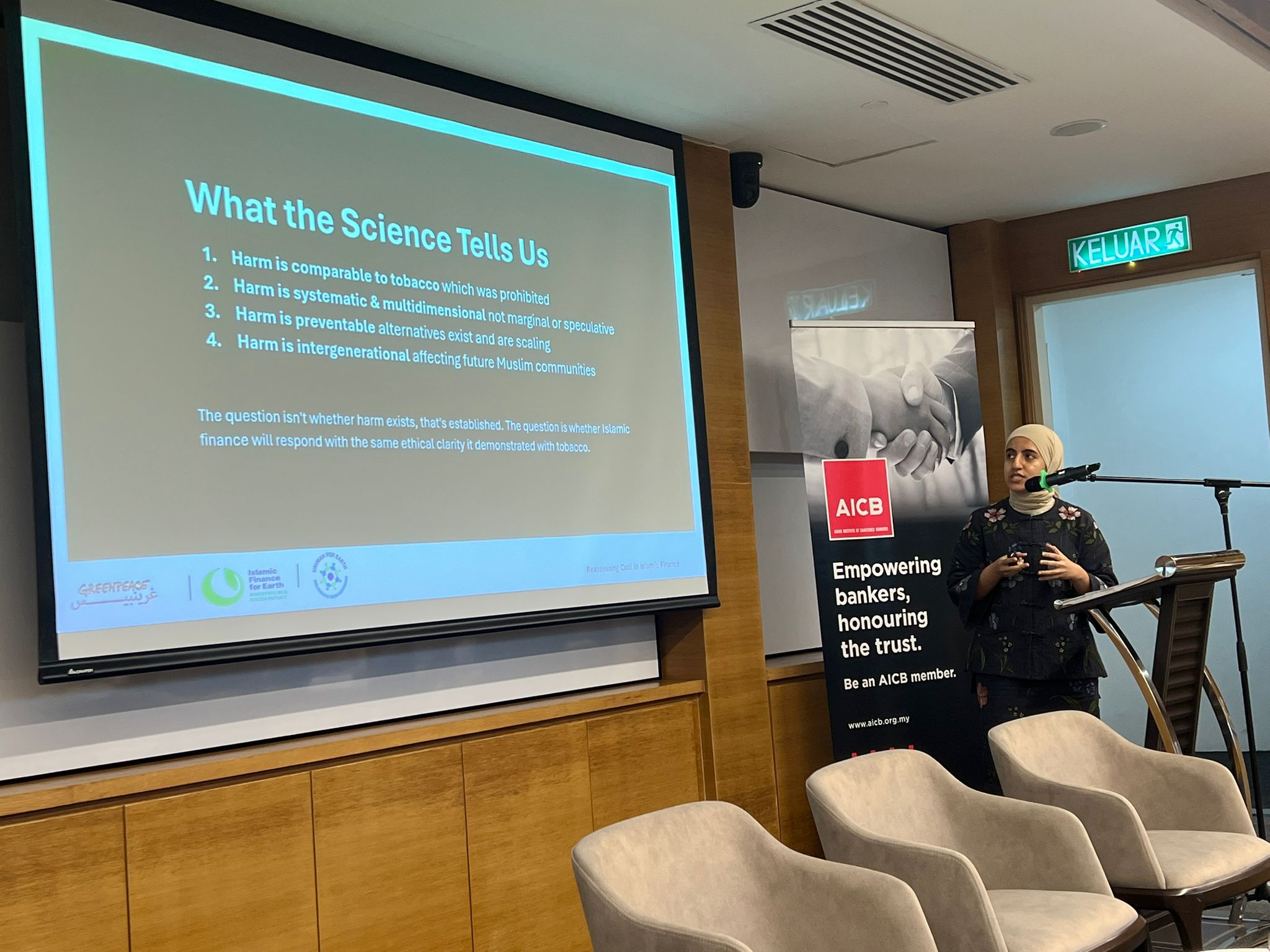
Hamizah Shamsudden, Climate and Energy Campaigner at Greenpeace Malaysia, presented the scientific underpinning of the Reassessing Coal in Islamic Finance report..
Her presentation drew on peer-reviewed medical research, IPCC and IEA climate science, and economic data from the World Bank and WHO. The argument was not framed as activism, but as evidence-based analysis.
Key findings included:
- Health impacts: Coal-related air pollution contributes to millions of premature deaths globally. A 2023 US study linked coal emissions to approximately 460,000 deaths between 1999 and 2020, with coal-based particulate pollution found to be more than twice as deadly as other sources. Globally, air pollution causes 6.7 million premature deaths annually, comparable in scale to tobacco.
- Disproportionate burden: Pregnant women, children, and low-income communities bear the heaviest impact.
- Economic costs: Pollution-related damages amount to an estimated $8.1 trillion annually, around 6% of global GDP.
The presentation closed with a stark ethical parallel: Islamic finance prohibited tobacco once its harm became clear. The question now is whether coal presents a similar moment of moral clarity.
Scholar Debate: Translating Evidence into Screening
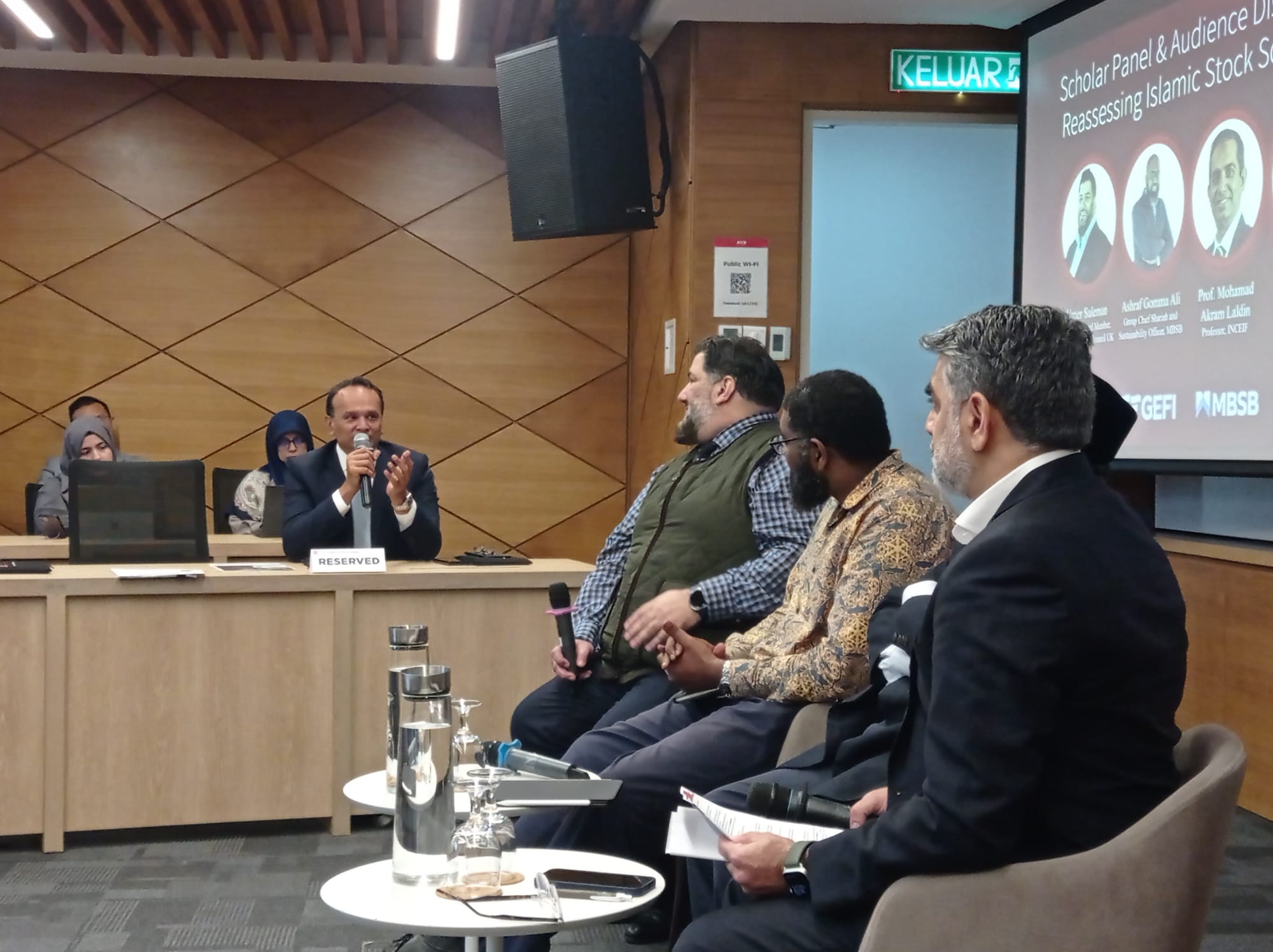
The final segment, moderated by Omar Shaikh, Managing Director of GEFI, brought together Prof. Dr Mohamad Akram (INCEIF), Ashraf Gomma Ali (MBSB), and Umer Suleman (Wahed/UKIFC).
This was not a forum for issuing rulings, but for surfacing where consensus may be emerging, and where tensions remain.
From a juristic and Maqasid perspective, the discussion examined whether contemporary scientific evidence fundamentally alters the classification of coal. If harm is now systematic, multidimensional and preventable, does that change the threshold for permissibility?
Umer Suleman reflected on areas of convergence from the earlier scholarly workshop, particularly around acknowledging material harm. However, practical implementation raises complex questions: should stock screening remain binary, or move toward a graduated framework that distinguishes between pure-play coal exposure and transitional contexts?
Ashraf Gomma Ali offered the banking lens. As both Shariah and sustainability leader at MBSB, he emphasised the importance of translating evolving scholarly thinking into credible board guidance, product design and portfolio decisions. The challenge is not only theological consistency, but operational clarity.
Beyond Screening: A Broader Trajectory
The Unlocking Islamic Sustainable Finance session made one thing clear: the debate is no longer about whether Islamic finance should engage sustainability. It is about how deeply and how credibly.
Maqasid alignment demands more than excluding harm, it requires proactive alignment with human flourishing, environmental stewardship and long-term resilience. Coal has become a litmus test for that ambition.
As Islamic finance continues to mature across ASEAN and beyond, its credibility will increasingly rest not only on compliance with form, but on its willingness to confront systemic harm with intellectual rigour and moral consistency.