
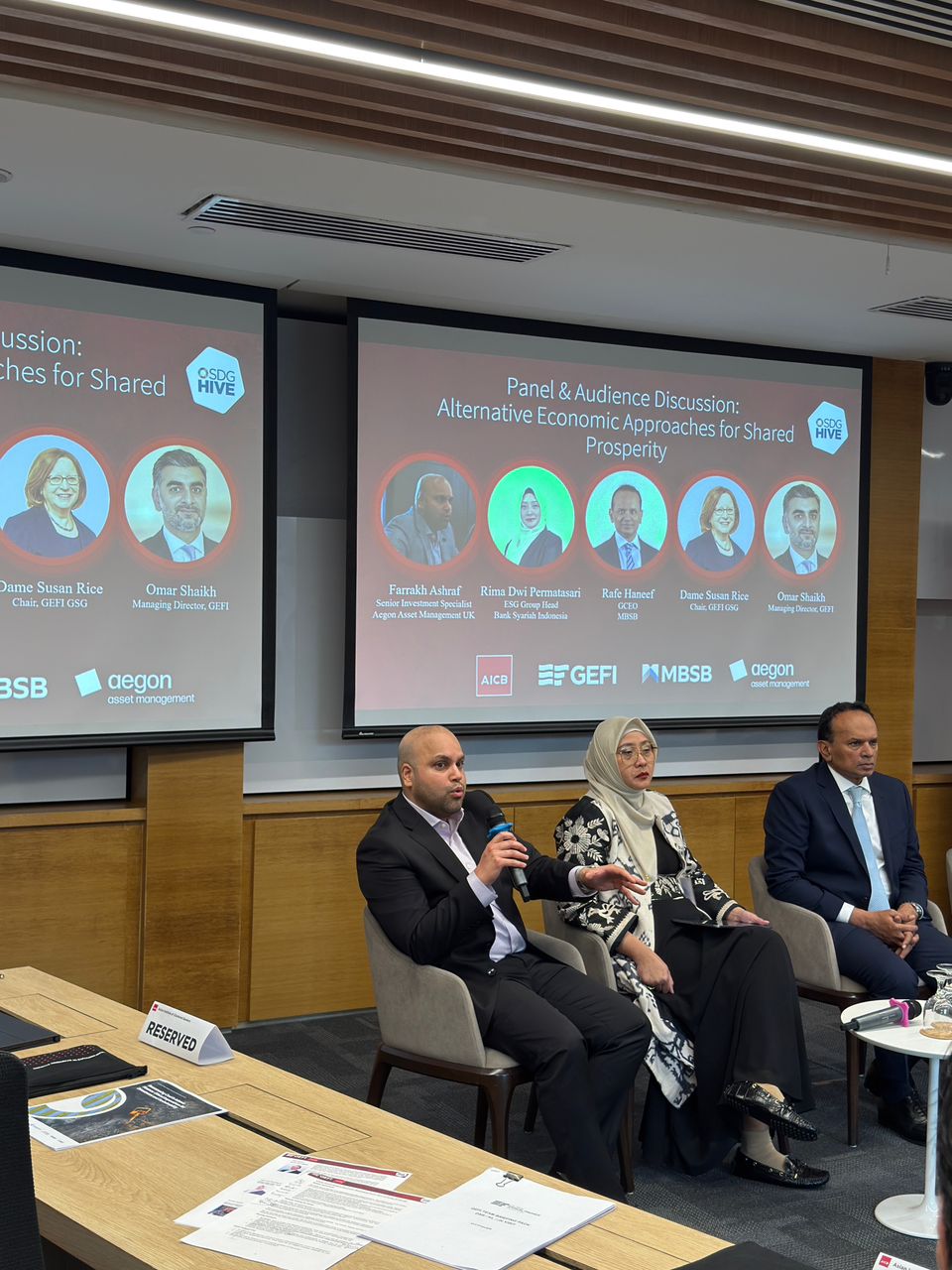
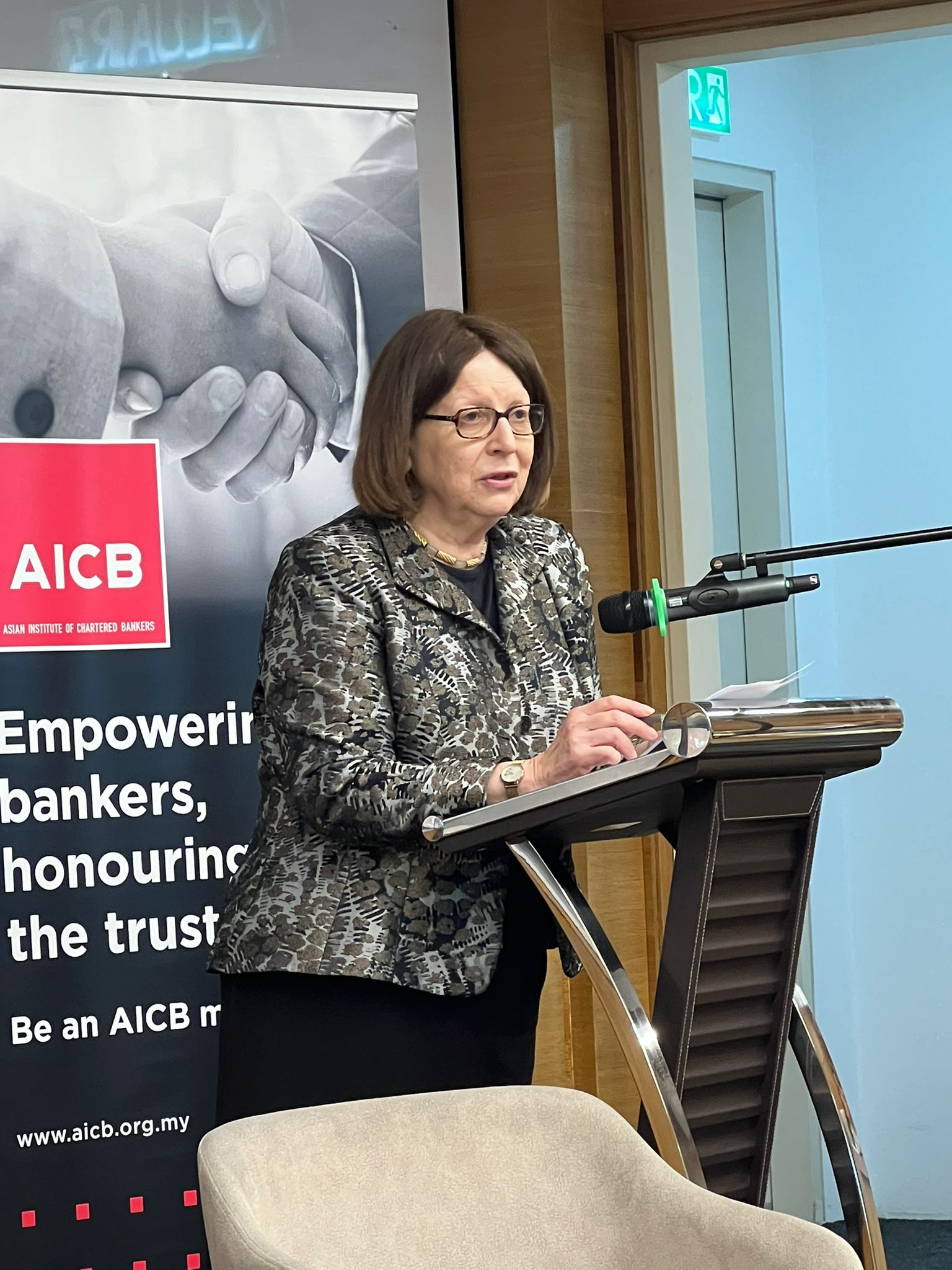
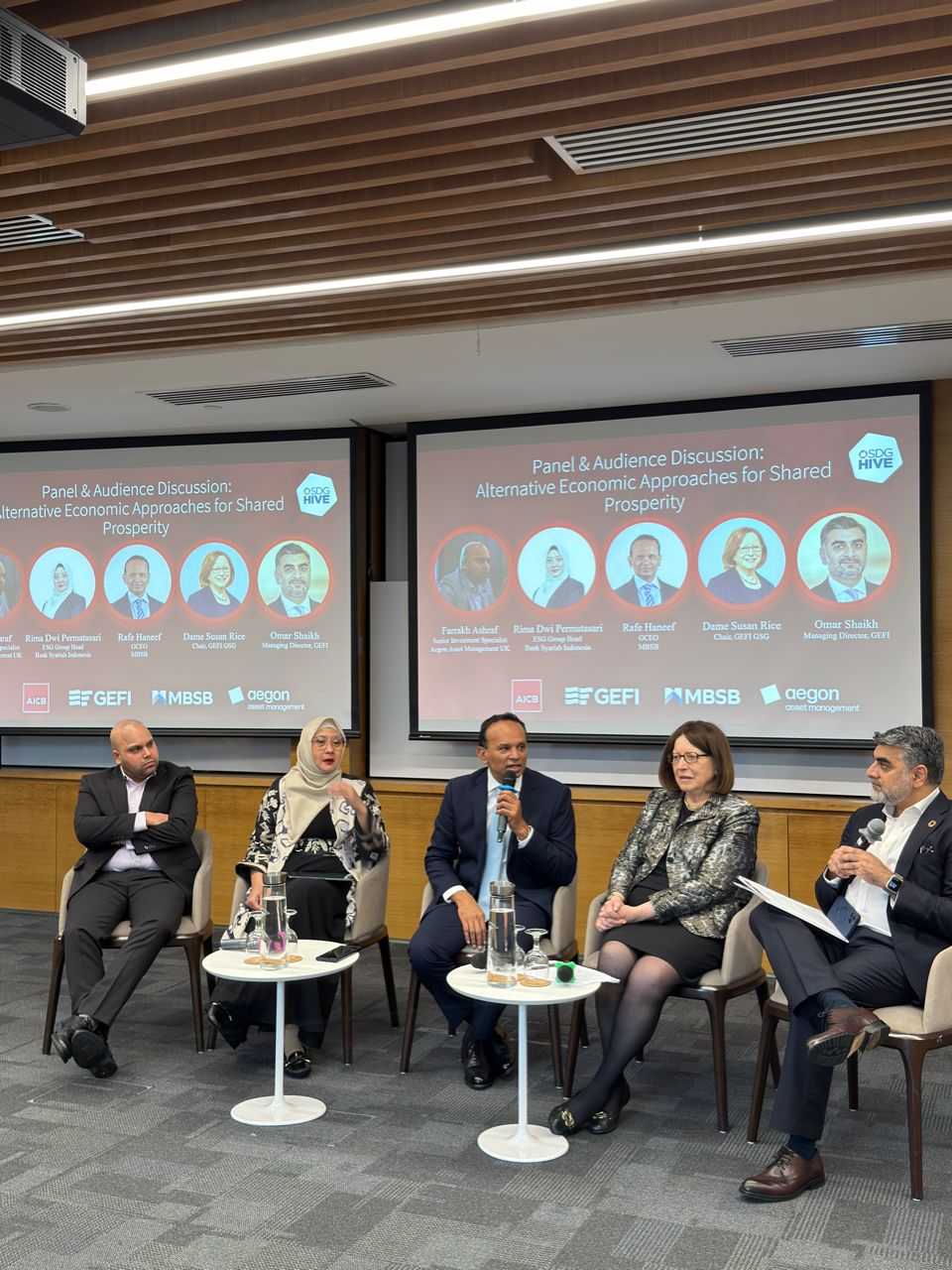
The second SDG Hive session shifted the focus from Islamic finance specifically to a broader question: what is finance ultimately for?
Opening the session, Dame Susan Rice delivered her keynote, Wealth of Nations, Health of the Planet, marking 250 years since Adam Smith’s The Wealth of Nations. She reminded participants that Smith was not only an economist, but a moral philosopher. Markets, she argued, are not morally neutral. Without trust and conscience, they drift.
Reflecting on ESG backlash, greenwashing, and speculative cycles, Dame Susan emphasised that culture, not compliance, determines whether finance serves society.
From Moral Framing to Market Practice
The panel discussion that followed, moderated by Omar Shaikh, explored what this means in practice across Southeast Asia.
Rafe Haneef, Group CEO of MBSB, described how development-focused banking increasingly requires acting as an ecosystem builder for SMEs, not simply a capital provider. Success must be defined by resilience and long-term value creation.
Rima Dwi Permatasari, Group Head ESG at Bank Syariah Indonesia, highlighted that Islamic finance does not automatically produce inclusive outcomes. Risk-sharing models and sustainability sukuk must be deliberately structured to support real-economy resilience.
Farrakh Ashraf, Senior Investment Specialist at Aegon Asset Management (Aegon AM), offered the asset management perspective. ESG frameworks, he argued, are not simply ethical overlays but tools for assessing systemic risks, climate, governance, and social instability, that directly affect long-term portfolio resilience.
The session concluded with a clear message: shared prosperity will not emerge from capital flows alone. It requires redesigned incentives, stronger institutional culture, and a deeper alignment between finance and moral purpose.