
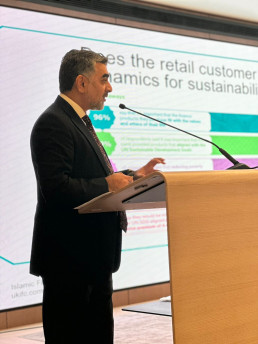
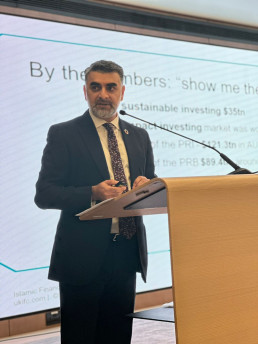
Omar Shaikh, Managing Director of the Global Ethical Finance Initiative (GEFI), delivered a compelling presentation on the pivotal role of Islamic finance in advancing global sustainability goals. He began by outlining GEFI’s mission to build sustainable finance ecosystems through advocacy and solutions, emphasizing the importance of private sector engagement in driving meaningful change.
Omar highlighted how events like the global financial crisis and the climate crisis have reshaped the narrative around finance, leading to concepts like profit with purpose and stakeholder capitalism. He pointed out that while Islamic finance is inherently ethical—avoiding investments in harmful sectors—there is a significant opportunity to deepen its impact on sustainability issues such as climate change and social justice.
Central to his message was the shift from focusing solely on what is permissible (halal) to embracing what is wholesome and good (tayyib). This transition involves not just avoiding harm but actively promoting environmental stewardship and social well-being, aligning with the ethical and spiritual dimensions of Islamic principles.
Omar also addressed unique features of Islamic finance that can enhance sustainable finance, such as the prohibition of speculative financial instruments and the integration of spiritual values like baraka (blessings). He acknowledged challenges within the industry, including the need for greater authenticity and alignment with the spirit of Shariah law.
In closing, Omar emphasized the substantial market opportunity. If just 5% of the projected $8 trillion Islamic finance market by 2030 is dedicated to sustainable finance, it would represent a $400 billion opportunity. He called for collaborative efforts among regulators, industry players, and grassroots organizations to unlock the full potential of Islamic sustainable finance.
Key Takeaways:
- Opportunity for Growth: Islamic finance can significantly contribute to global sustainability by moving beyond compliance to proactive impact.
- Shift in Mindset: Embracing the concept of tayyib encourages a deeper commitment to environmental and social responsibility.
- Market Potential: Aligning Islamic finance with sustainability principles presents a substantial economic opportunity, benefiting both the industry and global efforts to address climate challenges.