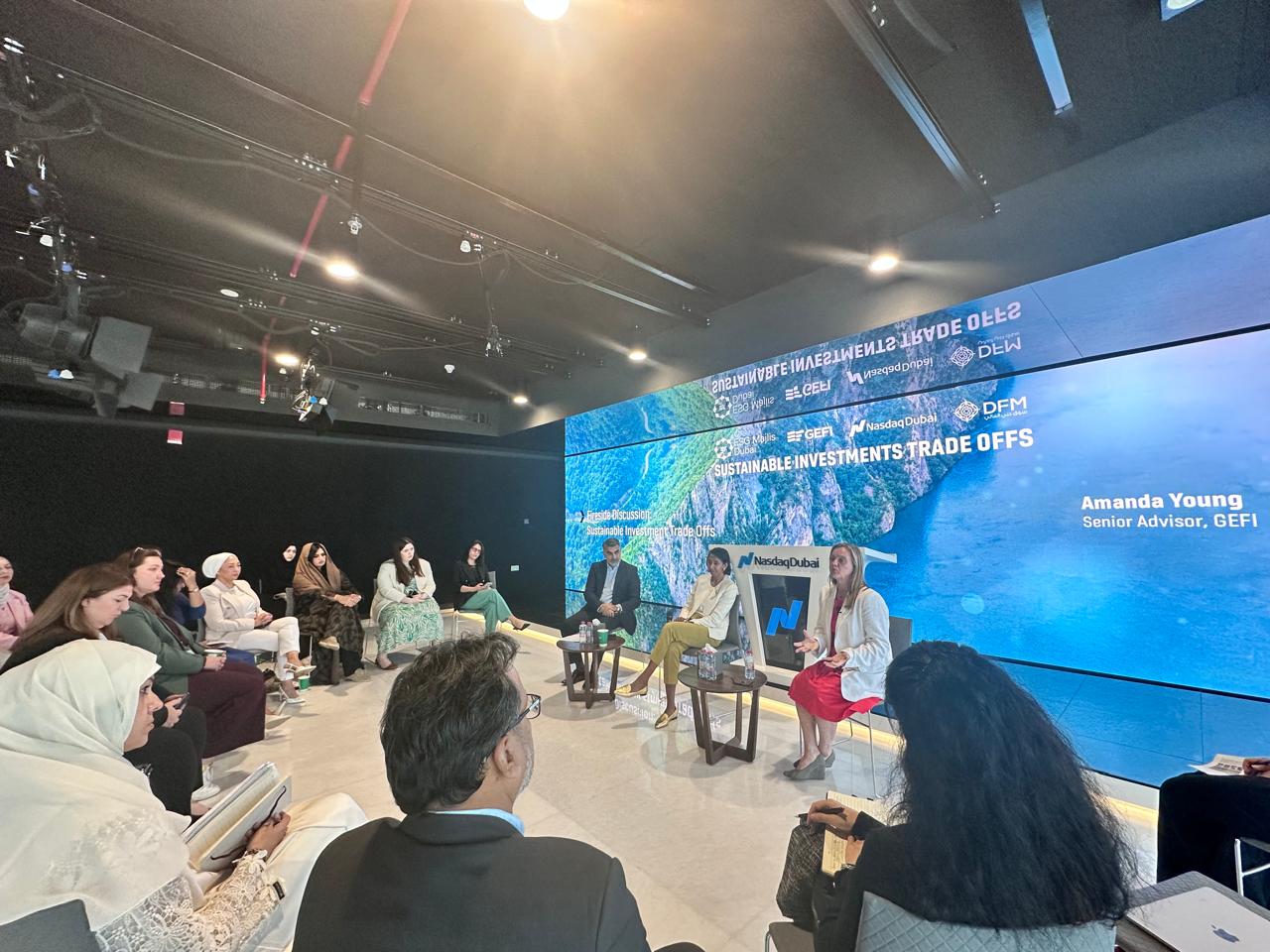
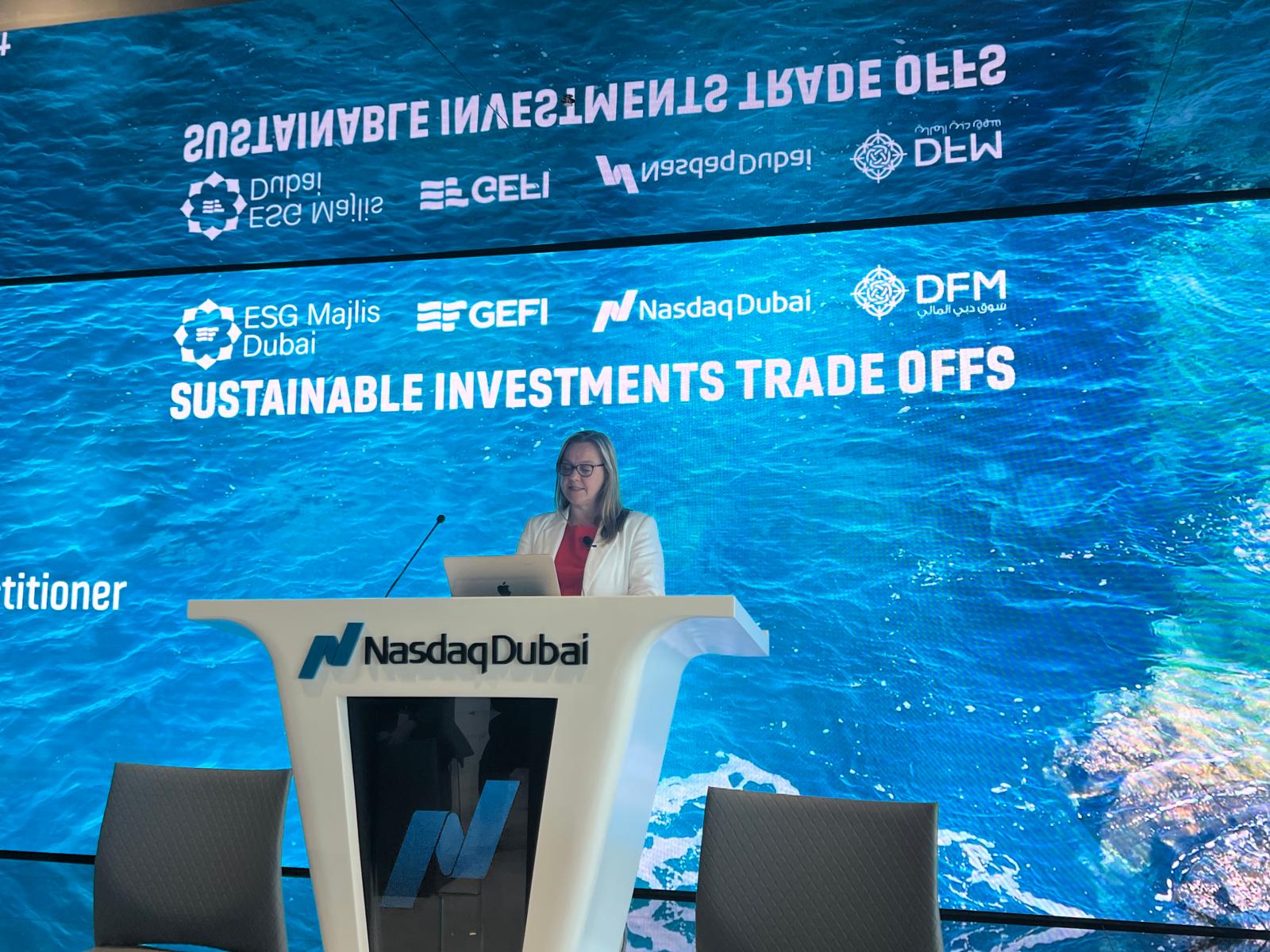
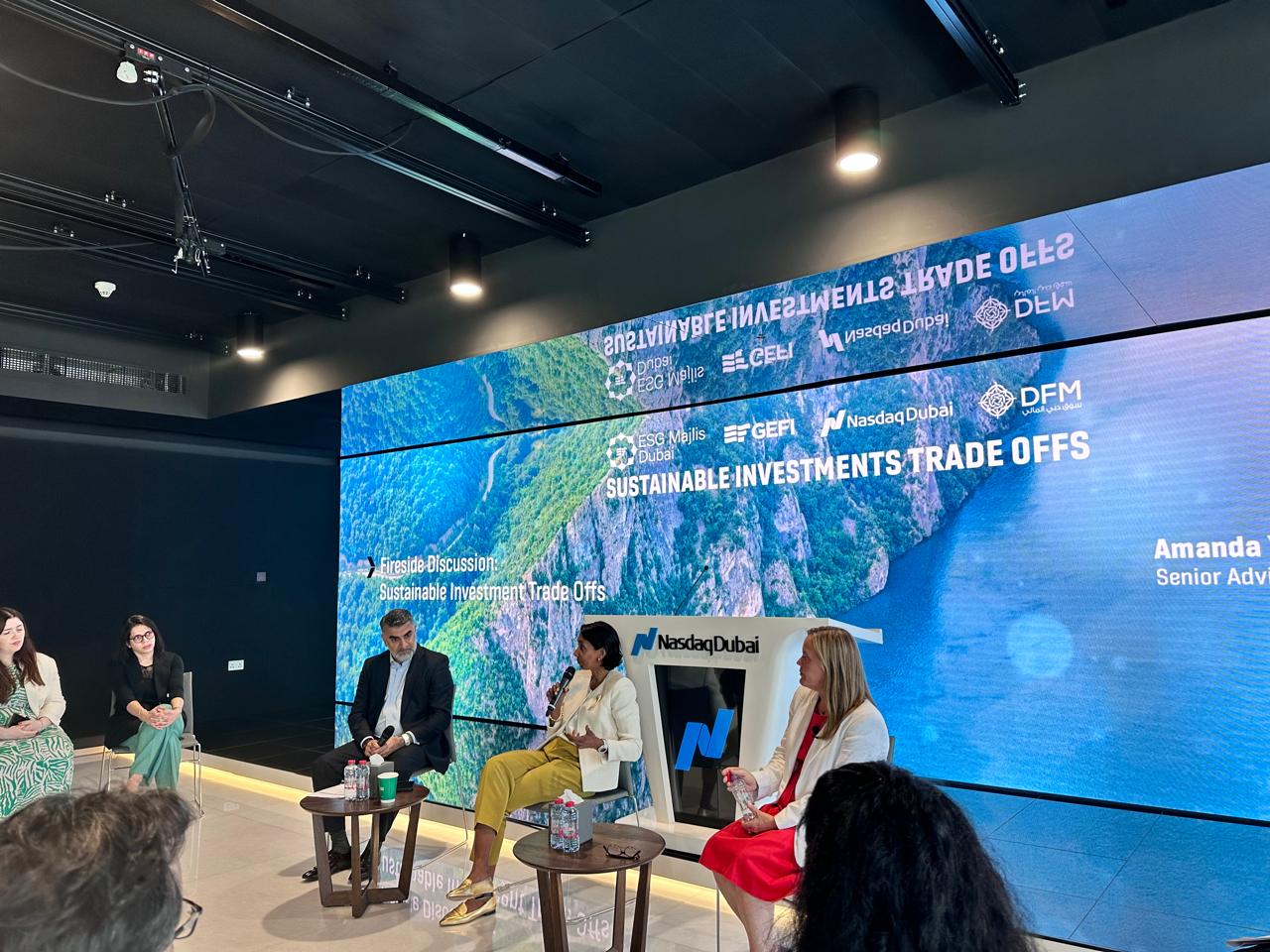
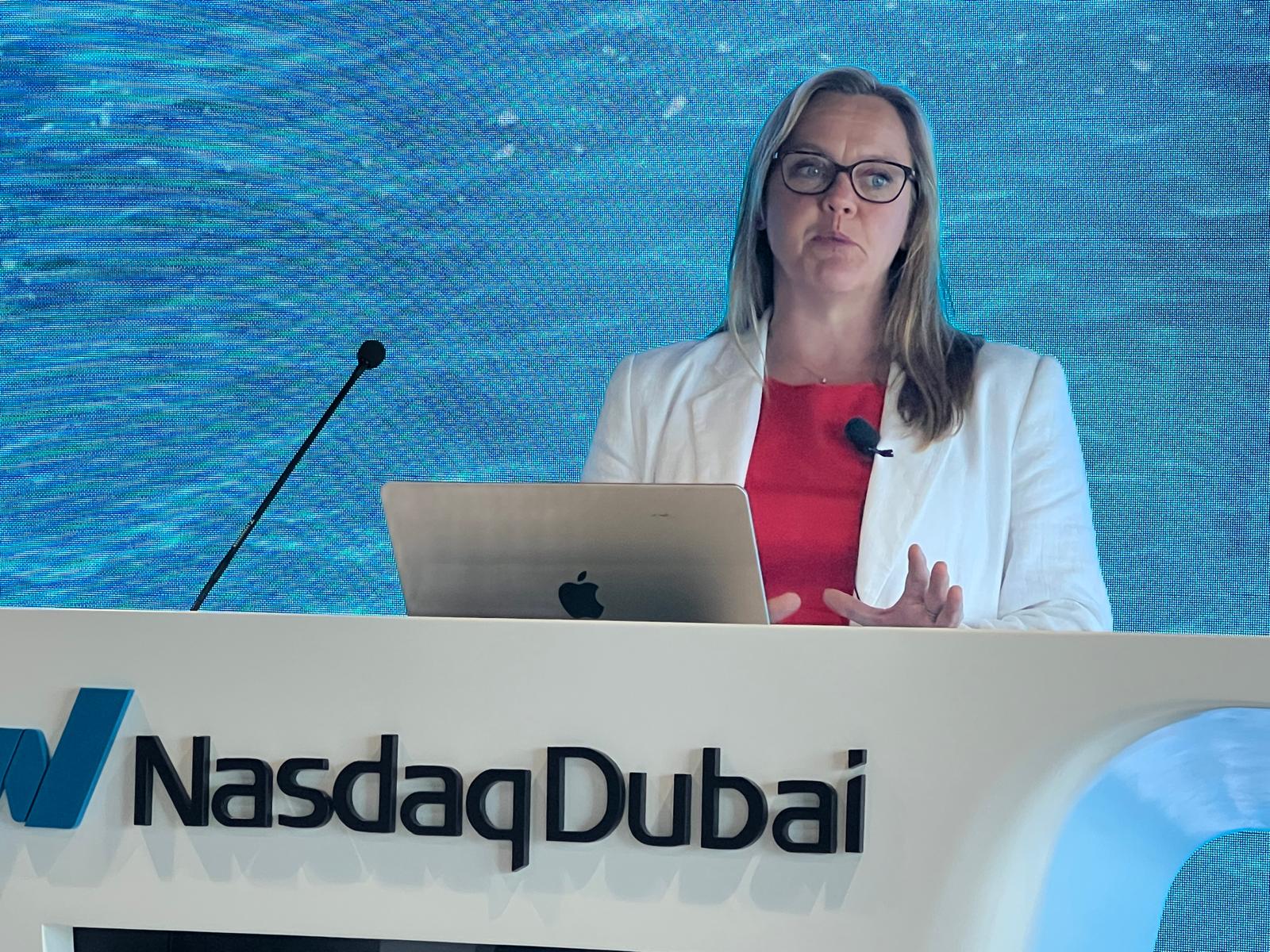
The session was themed “Sustainable Investment Trade Offs” and heard expert insights from Amanda Young, former Global Chief Sustainability Officer for Investments at Abrdn. and Sonali Siriwardena, Partner and Global Head of ESG at Simmons & Simmons
ESG Majlis Dubai
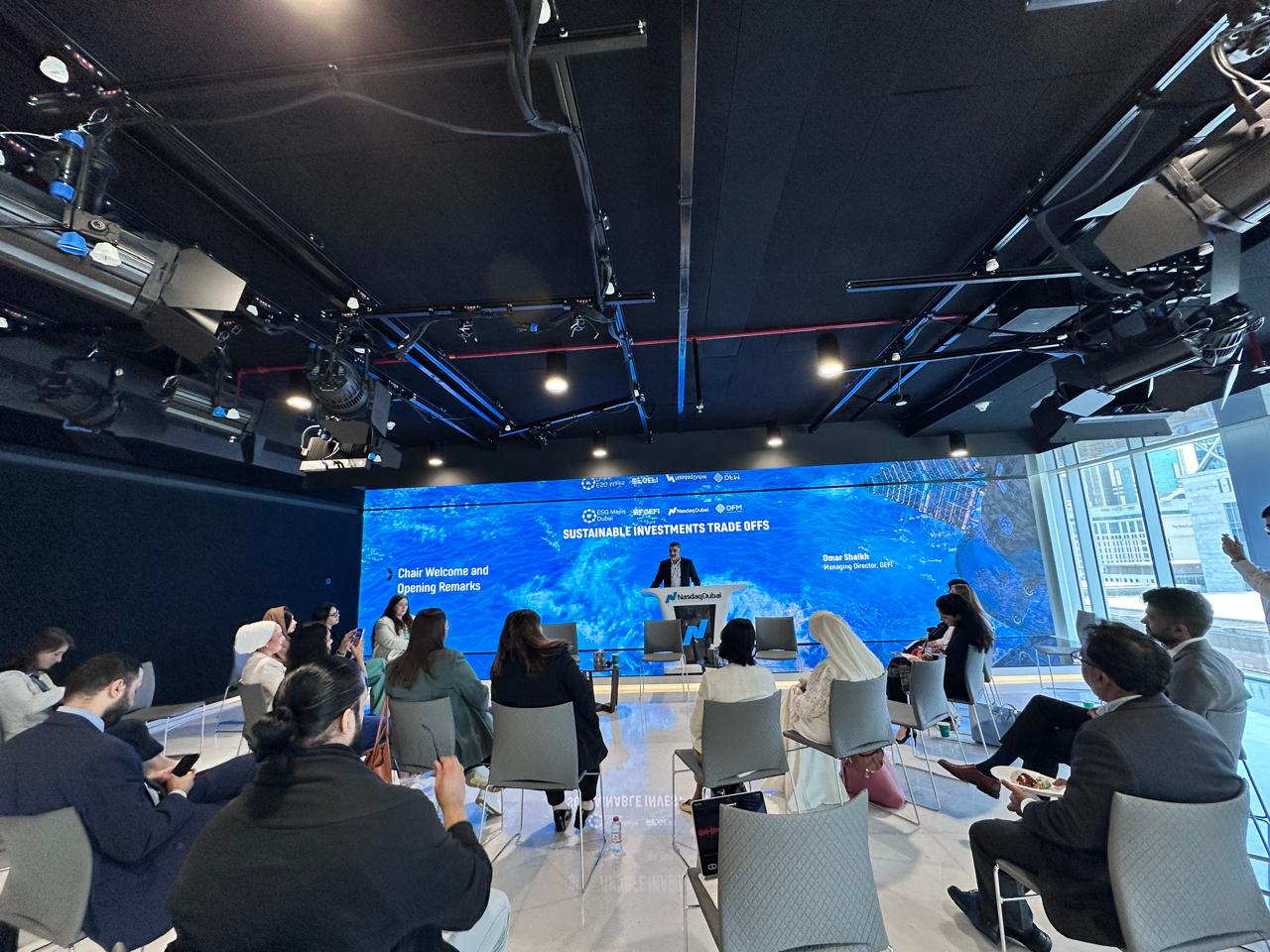
The fifth ESG Majlis took place at the Exchange, Nasdaq Dubai, on Thursday 15th May 2025 with the discussion delving into the key trade-offs in sustainable investment amid the increasingly complex financial landscape.
The Majlis was attended by senior representatives from DFM, Emirates NBD asset management, HSBC, FAB, Deloitte and DDCAP
Key discussion points that were covered during the interactive and dynamic session have been summarised below.
Confessions of a Justified ESG Practitioner
The session opened on a personal and reflective note, with Amanda Young, a seasoned ESG practitioner, sharing candid insights from her two-decade journey in sustainable investment. Her remarks traced the evolution of ESG from niche ethical investing to a core financial discipline, highlighting both the progress made and the persistent challenges in aligning capital with purpose. Her “confessions” set the tone for a dynamic and honest dialogue, underscoring the complexity of embedding sustainability into financial systems. Click here for her full keynote.
Overview of Dubai‘s Capital Markets
The ESG majlis was further contextualised by Dubai’s rising prominence in sustainable finance. Nasdaq Dubai has firmly positioned itself as a leading venue for both conventional and ESG debt instruments:
- USD 138 billion in total bonds and sukuk listings, with 162 active instruments.
- USD 9.03 billion in new debt listings year-to-date (2025).
- A diversified issuer base with 82% corporate and 18% government entities, and over 55% of listings originating from the UAE.
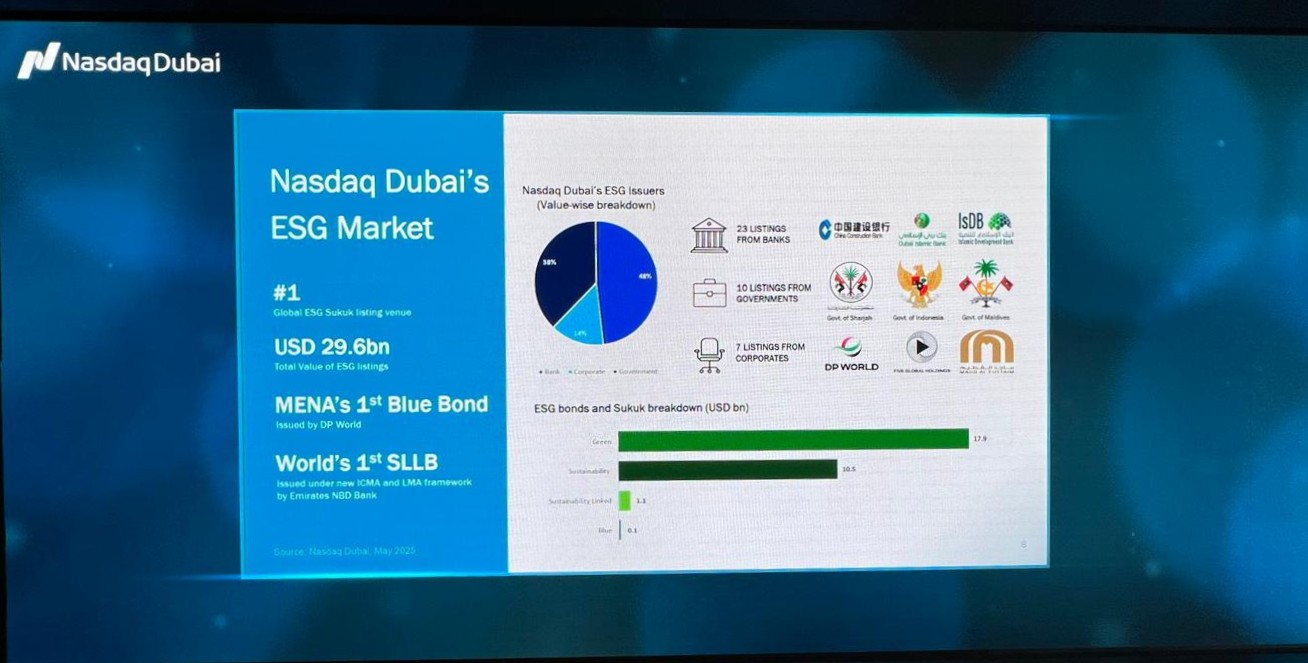
In the ESG space, Nasdaq Dubai stands out as the #1 global ESG sukuk listing venue, with:
- USD 29.6 billion in ESG listings.
- Landmark issuances include MENA’s first blue bond (DP World) and the world’s first Sustainability-Linked Loan Bond (SLLB) under ICMA and LMA frameworks (Emirates NBD).
- ESG issuer mix includes banks (45%), governments (14%), and corporates (36%), reflecting broad engagement across sectors.
Open Discussion and Insights
The discussion highlighted a clear shift. Sustainability is no longer just an ethical imperative but a commercial necessity. ESG integration is maturing from values-based investing toward data-driven, financially grounded strategies. However, tensions persist. Participants explored the persistent misalignment between long-term sustainability goals and short-term market expectations, noting that quarterly earnings cycles often deprioritise ESG initiatives that require upfront investment and yield longer-term returns.
The Majlis examined how ESG is evolving from a risk mitigation tool into a driver of innovation and competitive advantage. Yet, conventional financial metrics can obscure the value of sustainable models. Attendees stressed the need to rethink how performance is measured and valued across portfolios.
Regulation featured prominently in the discussion. While participants acknowledged the importance of consistent standards to improve disclosure and accountability, they warned of mounting “regulatory fatigue” due to overlapping frameworks and operational burdens. In parallel, calls were made for more targeted regulation to support nascent markets such as carbon credits and nature-based assets, which were seen as critical to scaling sustainability efforts.
Beyond technical considerations, the conversation turned to the need for deeper cultural and governance shifts. Embedding sustainability into core business strategy, rethinking fiduciary duties, and aligning incentives with long-term outcomes were seen as vital steps toward meaningful transformation.
Summary
The discussion challenged conventional thinking around trade-offs, calling for a fundamental shift in mindset. Rather than perceiving tensions between return and purpose, short-term performance and long-term resilience, or risk and innovation as binary choices, participants emphasised the need to approach them as dynamic interdependencies.
Reframing trade-offs not as compromises, but as opportunities for systemic alignment, requires moving beyond a mindset of sacrifice toward one of strategic integration. This shift demands a deeper cultural transformation within finance where complexity is embraced, long-term thinking is normalised, and success is measured not solely by financial returns, but by the capacity to generate enduring social and environmental value. Sustainability, in this sense, becomes not an external consideration but a redefinition of what it means to steward capital responsibly.