
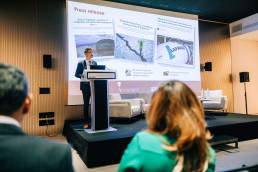

Guillaume Rozas opened his keynote by noting that corporate accountability in environmental and human rights issues is increasingly spotlighted, with recent press revealing cases that place companies under scrutiny for their decisions. From climate-related disputes to human rights allegations, companies today face mounting pressure to consider social and environmental risks in their operations.
Part 1: Duty of Vigilance Law and the Corporate Sustainability Due Diligence Directive (CS3D)
Duty of Vigilance Law
Introduced in France in 2017, the Duty of Vigilance Law requires large companies to identify and address potential environmental and human rights risks within their supply chains. Since its enactment, cases have begun surfacing, though the number remains limited, with lighter sanctions often applied. Guillaume highlighted how this law has spurred formal notices and lawsuits, with cases like La Banque Postale and Suez illustrating how companies are held to this standard.
CS3D: Corporate Sustainability Due Diligence Directive
In contrast, the forthcoming CS3D regulation seeks to impose more stringent requirements on corporate sustainability practices across the European Union. CS3D is set to have a more detailed scope and stricter sanctions compared to the Duty of Vigilance Law, marking a significant shift towards enhanced accountability standards within the EU.
Part 2: Environmental Litigation
Environmental disputes involve a range of stakeholders, including NGOs, investors, and government bodies. These cases are rising globally, especially those related to climate change, with a 2017–2022 trend showing increased litigation driven by environmental advocacy and societal expectations. Stakeholders are calling for stricter accountability, with litigation often focusing on alleged greenwashing or the failure of companies to meet climate commitments.
Part 3: Shell’s Decision to Halt Arctic Drilling – A Case Study
A notable case highlighting the interplay of corporate strategy and reputational risk involves Shell’s decision to cease Arctic drilling. Officially attributed to technical risks and profitability concerns, Greenpeace claims that its activism and the mounting reputational risk influenced Shell’s decision. This case underscores the reputational vulnerabilities companies face in high-stakes environmental decisions.
Conclusion
The current regulatory landscape increasingly requires companies to account for environmental and social risks in their decision-making. While reputational risks are a key driver, stricter regulations, such as CS3D, signal a future where compliance with sustainability standards is more than just advisable—it’s essential. This shift represents what some experts, including Rozas, consider the beginning of a new era in corporate accountability, one where ESG considerations and litigation risks will be pivotal in shaping responsible business practices.
Key Takeaways
- Duty of Vigilance and CS3D frameworks are setting the stage for corporate responsibility in environmental and human rights standards.
- The rise in climate litigation reflects a demand for accountability, with CS3D expected to reinforce this trajectory.
- Corporations will likely face increased pressure as both stakeholders and regulations emphasise transparent, sustainable, and ethical operations.