
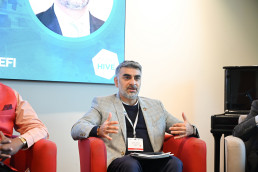


In the final SDG Hive session led by Graham Burnside, CO-founder of the UK Islamic Finance Council, experts examined the intersection of Islamic finance and the climate crisis.
Islamic Sustainable Finance Update
Omar Shaikh, Founder, UK Islamic Finance Council began by explaining that over the last few decades, Islamic finance has evolved into a unique, faith-based alternative within the global financial system, guided by ethical principles such as the prohibition of interest and the commitment to do no harm.
Traditionally, the industry has focused on negative screening and alternative products, but there is a growing imperative to address sustainability more proactively. Recent initiatives, including the UK Islamic Finance Council’s global financing task force, aim to embed sustainability into Islamic finance practices. This shift reflects a broader movement towards ethical investing, recognizing the importance of animal welfare, biodiversity, and climate change within investment strategies.
As demand for responsible investing rises, Islamic finance has a significant opportunity to redefine its role by embracing sustainability as a core principle, creating a more inclusive economy that balances profit with environmental and social responsibility.
Jain and Hindu Perspectives
Professor Atul Shah, City University London then delivered a presentation and emphasised the importance of servant leadership in finance. He argued that while finance textbooks often focus on equations, cultural and spiritual dimensions are crucial for understanding finance’s impact. Highlighting the concept of Dharma as the science of sustainable living, they suggested that India’s diverse cultural perspectives on finance could offer valuable insights. This perspective calls for a reevaluation of finance that incorporates values from Dharmic traditions, which emphasize community and shared prosperity, illustrated by cultural practices such as the Jain community’s Chopra Puja ritual, which fosters gratitude and communal harmony.
Christian Perspectives
Robert Burgon, Chair of the Church of Scotland Investors Trust, provided insights into the Trust’s ethical investment strategy, which manages funds for congregations looking to invest surplus money. Established 30 years ago, the Trust excludes sectors like alcohol and tobacco while adhering to ESG principles. He shared the church’s struggles with fossil fuel investments, leading to the decision to divest from oil and gas companies based on investment considerations rather than political pressure. Following this, the church established an Ethical Oversight Committee to ensure that investment practices align with its mission of safeguarding creation. This committee collaborates with organizations like Faith Invest to navigate the complexities of ethical investing, emphasizing responsible stewardship while ensuring returns for investors.
The Role of ESG in Modern Investment
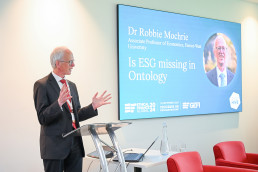
Dr. Robbie Mochrie from Heriot Watt University explored the intersections of philosophy, theology, and investment practices, particularly focusing on ESG (Environmental, Social, and Governance) investing. He framed his remarks around Eastern philosophies emphasizing unity in creation, contrasting them with Western thought, which often separates humanity from nature. By tracing the historical development of Western economic systems, Dr. Mochrie critiqued their often exploitative nature and highlighted the necessity for sustainable and equitable practices. He posited that ESG investing is a modern response that seeks to include considerations for future generations and environmental impacts in financial decision-making. The conclusion underscored the importance of adopting a long-term perspective in ESG, aligning with philosophical and religious traditions that consider broader implications beyond immediate benefits.
These discussions underscore the need for diverse perspectives in shaping a responsible financial landscape that recognizes the interconnectedness of humanity, nature, and future generations. As the conversation around ethical finance evolves, integrating sustainability into investment strategies becomes increasingly crucial.