

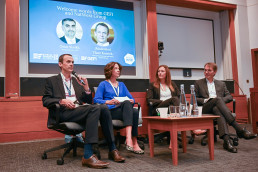
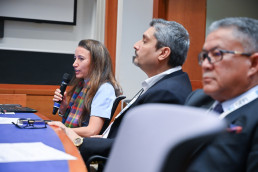
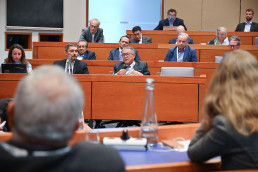
Our first SDG Hive session, moderated by Thom Kenrick, Head of Social Strategy and Impact at NatWest Group, opened with a candid exploration of our progress toward achieving the Sustainable Development Goals (SDGs).
Satya S. Tripathi, Secretary General of the Global Alliance for a Sustainable Planet, delivered a stark and sobering message: “We are failing miserably, and it’s a collective failure—not just the UN.” His critique reflected the urgency of the task at hand, but he also offered a path forward, emphasising the importance of “virtuous partnerships.” For Satya, the solution to our global sustainability crisis lies in collaboration across governments, businesses, and civil society, urging the audience to work together to create the transformative changes needed.
Yulia Bull, Head of UK & Ireland Responsible Investment Ecosystems at PRI, added a more optimistic note. She highlighted how capital flows are increasingly being tied to sustainability outcomes, with responsible investment strategies gaining momentum. Bull pointed out that while the 2030 deadline for the SDGs might not be met, the ongoing shift in aligning investment decisions with long-term sustainability goals shows significant progress. She argued that even if we fall short of the 2030 timeline, the journey itself remains vital, and every step forward brings us closer to the goals.
Both speakers drove home a critical message: although time is running out, the need for action remains paramount. As Tripathi put it, “There is no such thing as a sustainable region in an unsustainable world.” Despite the challenges, it’s clear that continued progress towards the SDGs is essential, and collective action is the key.
The session then turned to insights from different regions, each grappling with its own sustainability challenges and opportunities.
North America
Kimberley Player, Strategic Investment Advisor, raised concerns about the political uncertainties in the U.S. and Canada, particularly with upcoming elections that could affect the sustainability agenda. However, she highlighted the positive strides being made at the state level, particularly in California and New York. Events like Climate Week NYC have helped to keep sustainability at the forefront, with local initiatives driving meaningful progress despite federal challenges.
Europe
Julie Malzac, Director at Accuracy, spoke about Europe’s leadership in sustainability, noting that while the continent has been at the forefront of promoting ESG transparency and regulatory frameworks, significant disparities in SDG performance remain across EU countries. Europe’s legislative push for better ESG disclosures is a global example, but Malzac stressed that more needs to be done to bridge the performance gap.
Arnaud Cohen Stuart, Head of Business Ethics at ING, raised an important and often overlooked question: “Who’s going to pay the bill?” His remarks highlighted the growing need for a clear sustainability taxonomy to ensure transparency in how costs are distributed across sectors and stakeholders, making sure that no region or industry is left behind in the green transition.
Middle East
Amal Larhlid (أمال لغليض), Partner at PwC Middle East, offered a perspective on the Middle East’s growing awareness of sustainability. She stressed that businesses in the region are increasingly recognising the importance of integrating sustainability into their core operations, rather than treating it as a mere compliance cost. “Sustainability is a business imperative, not just a compliance cost,” she remarked, adding that cohesive policies and regulations are urgently needed to support this shift. As countries in the region look to diversify their economies, sustainability will be central to their long-term strategies.
South Asia
Arslan Iqbal, Chief Risk Officer at The Bank of Punjab, spoke about Pakistan’s unique vulnerability to climate change. As one of the top 10 most affected countries, Pakistan faces severe challenges related to food security, environmental degradation, and energy shortages. Iqbal emphasised the need for urgent action, particularly in mitigating and adapting to climate risks.
Dato’ Wan Kamaruzaman Wan Ahmad, Chairman of MBSB Bank Berhad in Malaysia, added to the conversation by highlighting Malaysia’s commitment to integrating ESG into Islamic finance. He stressed the importance of stewardship in investment decisions, noting that Islamic finance provides a long-term approach that aligns with both local and global sustainability goals. “As Islamic banks, we seek to serve clients cradle to heaven, beyond the grave,” he said, underlining the moral and ethical dimensions that drive their commitment to sustainable finance.
As the session wrapped up, one thing became clear: while we may not reach the SDGs by 2030, the journey remains critical. The road to sustainability is long, but progress, however incremental, is better than inaction. The key to advancing the SDGs lies in demonstrating the economic value of sustainability. As we have seen from the regional perspectives shared during this session, whether it’s for nations, businesses, or investors, aligning economic interests with sustainability outcomes is crucial for driving change at scale.