


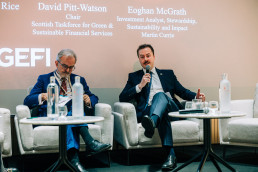

In a compelling panel led by Dame Susan Rice, joined by David Pitt Watson and Eoghan McGrath, Martin Currie the conversation centered on the key barriers, motivations, and complexities surrounding ESG integration across organisations and industries. Together, they unpacked critical issues such as measurement challenges, the role of regulation, and the need for governance alignment to embed ESG into business strategy effectively.
Key Challenges to ESG Integration
The panel identified three primary barriers to ESG integration:
- Measurement and Timing: ESG benefits often take time to materialise, creating a “J-curve effect” where companies incur initial costs without seeing immediate returns. This delay can deter companies and investors focused on short-term profitability.
- Reporting Standardisation: A lack of consistent reporting standards complicates ESG measurement, creating discrepancies that challenge transparent performance evaluations.
- Balancing Growth, Profitability, and ESG: While ESG is recognised as critical for risk management, companies still struggle to balance these principles with profitability and growth objectives.
To overcome these hurdles, the panel suggested practical solutions like sustainability-linked financial products, blended finance, and a rethinking of traditional risk assessments. These methods, they argued, can help reduce the financial burdens associated with ESG while offering companies a path to long-term resilience and value creation.
The Case of BYD: ESG in Action
As a testament to effective ESG integration, the panel highlighted BYD’s transition from battery production to electric vehicles. BYD’s journey exemplifies how companies can use ESG principles to drive growth and profitability while responding to global sustainability demands. By leveraging its expertise, BYD pivoted strategically, setting a strong example of ESG as a catalyst for innovation.
ESG as a Governance and Investment Priority
Eoghan McGrath of Martin Currie discussed their approach to ESG, emphasising the importance of integrating ESG principles across all investment decisions. At Martin Currie, ESG is embedded in governance structures, aligning it with investment and ownership practices to ensure comprehensive implementation. This governance-centric approach underscores the need for strong corporate leadership to champion ESG throughout an organisation.
Regulation: Motivator or Inhibitor?
The debate over whether regulation drives or deters ESG efforts was a focal point of the discussion. The panel explored the UK’s regulatory approach, which uses codes and guidelines rather than strict laws to encourage corporate governance. David Pitt Watson cautioned against relying too heavily on regulation, as it could inadvertently stifle innovation and lead to regulatory “fatigue.” As Eoghan mentioned, continuous regulatory changes can result in companies feeling pressured to meet shifting standards rather than focusing on meaningful, voluntary ESG integration.
Dame Susan cited the U.S. Inflation Reduction Act as a successful example of policy that incentivises sustainable actions without explicitly labeling them as ESG, thereby encouraging companies to take meaningful steps toward sustainability goals.
Local Focus in ESG Investment
The panel highlighted the importance of place-based approaches, which consider local community and social impacts along with environmental factors. They noted the challenges of implementing ESG in global markets, where local priorities can clash with international standards, complicating alignment efforts. A nuanced approach is essential, the panel suggested, for engaging responsibly with both local and international stakeholders.
Engagement over Divestment
On the topic of divestment, the panel advocated for it as a last resort, to be pursued only after all avenues of engagement have been exhausted. Rather than superficially aligning with frameworks like the Sustainable Development Goals (SDGs), the panel argued for intentional contributions that align with company purpose and values.
Integrating ESG into Core Business Strategy
The panel emphasised that ESG shouldn’t exist separately from a company’s core business strategy but should be woven into the governance and organisational culture. Boards must commit to open and honest discussions about ESG, making decisions driven by purpose rather than solely reacting to external pressures. By doing so, companies can establish a resilient foundation that aligns profitability with responsible growth.
Conclusion
This insightful session underscored the complexities and the potential of ESG integration. While challenges exist, the panel’s recommendations—ranging from innovative financial solutions to robust governance and local engagement—point toward a roadmap for companies aiming to make ESG a fundamental part of their strategy. As regulations continue to evolve, the message was clear: true ESG integration requires a commitment to purpose-driven leadership, thoughtful engagement, and resilience to weather both short-term costs and long-term benefits.