Transition Finance in Practice: Building Credible Pathways to Net Zero
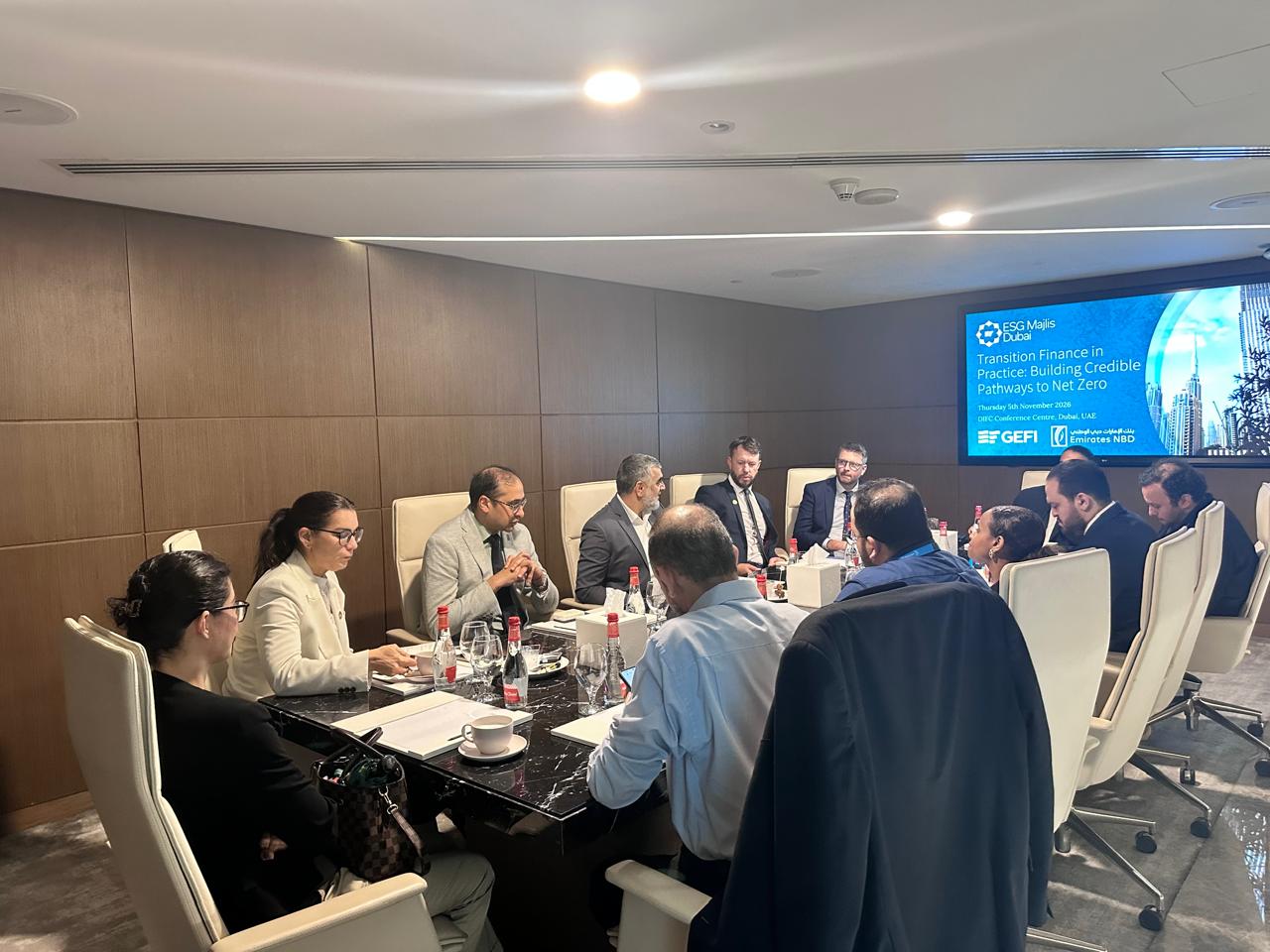
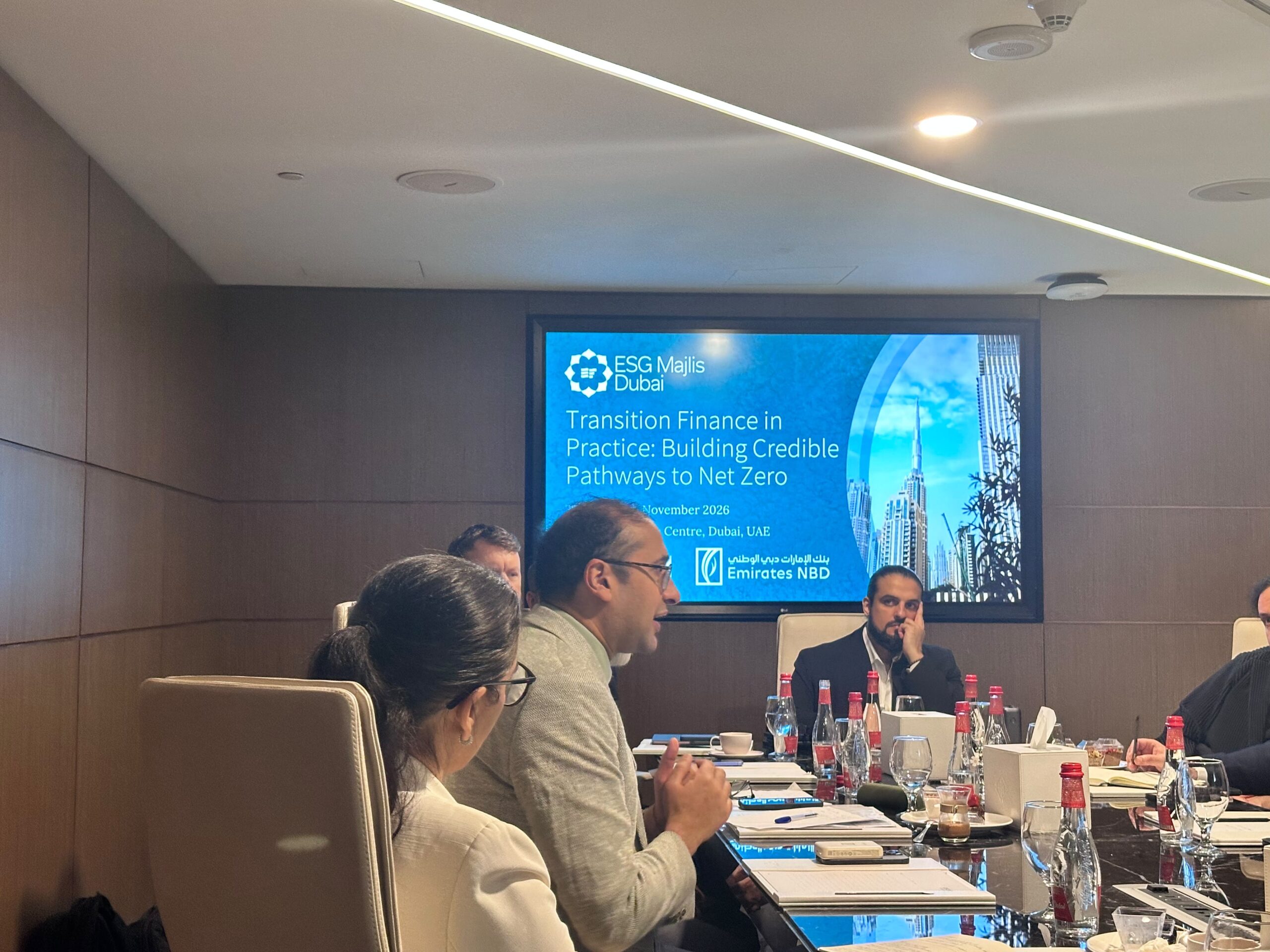
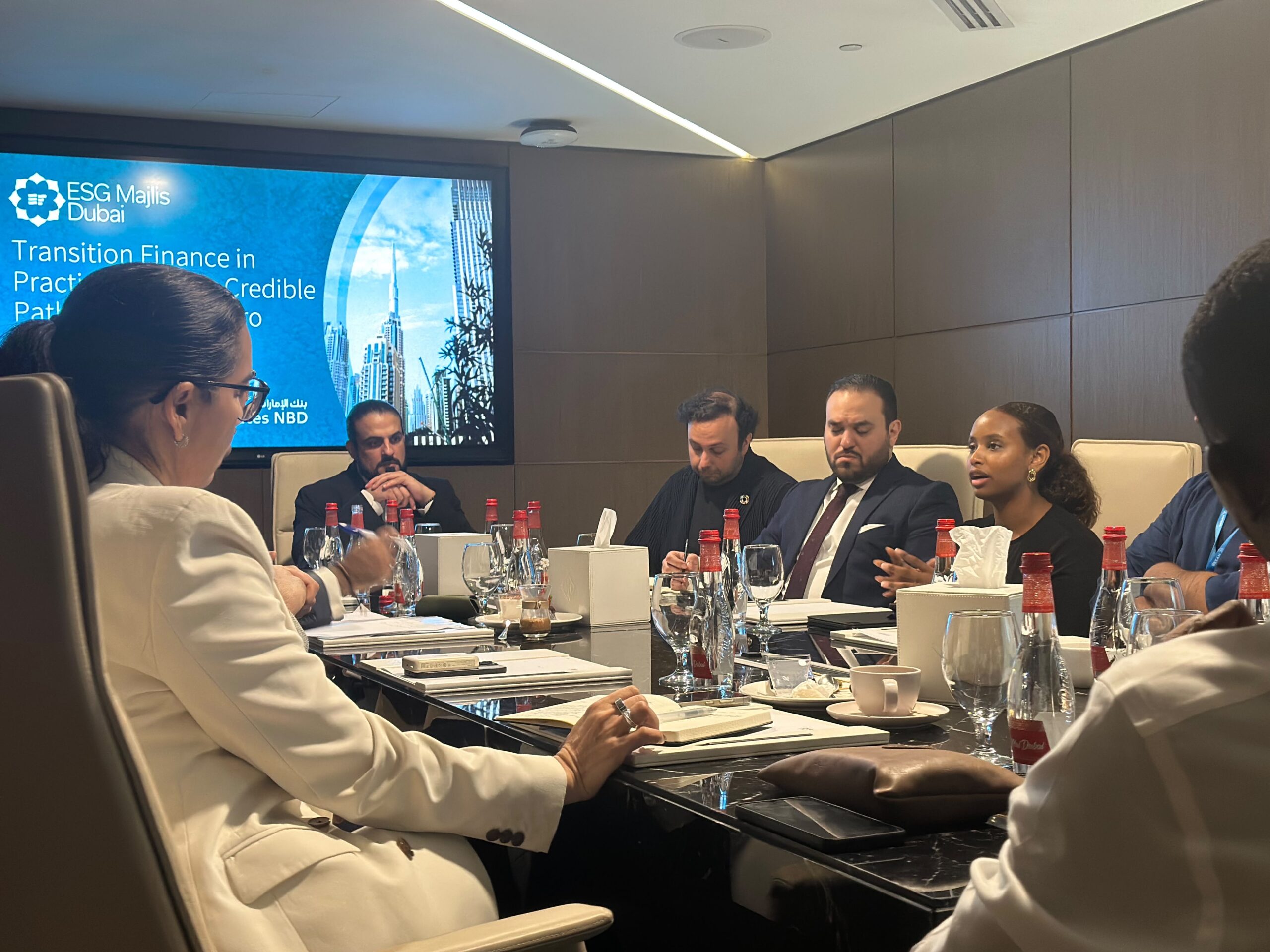
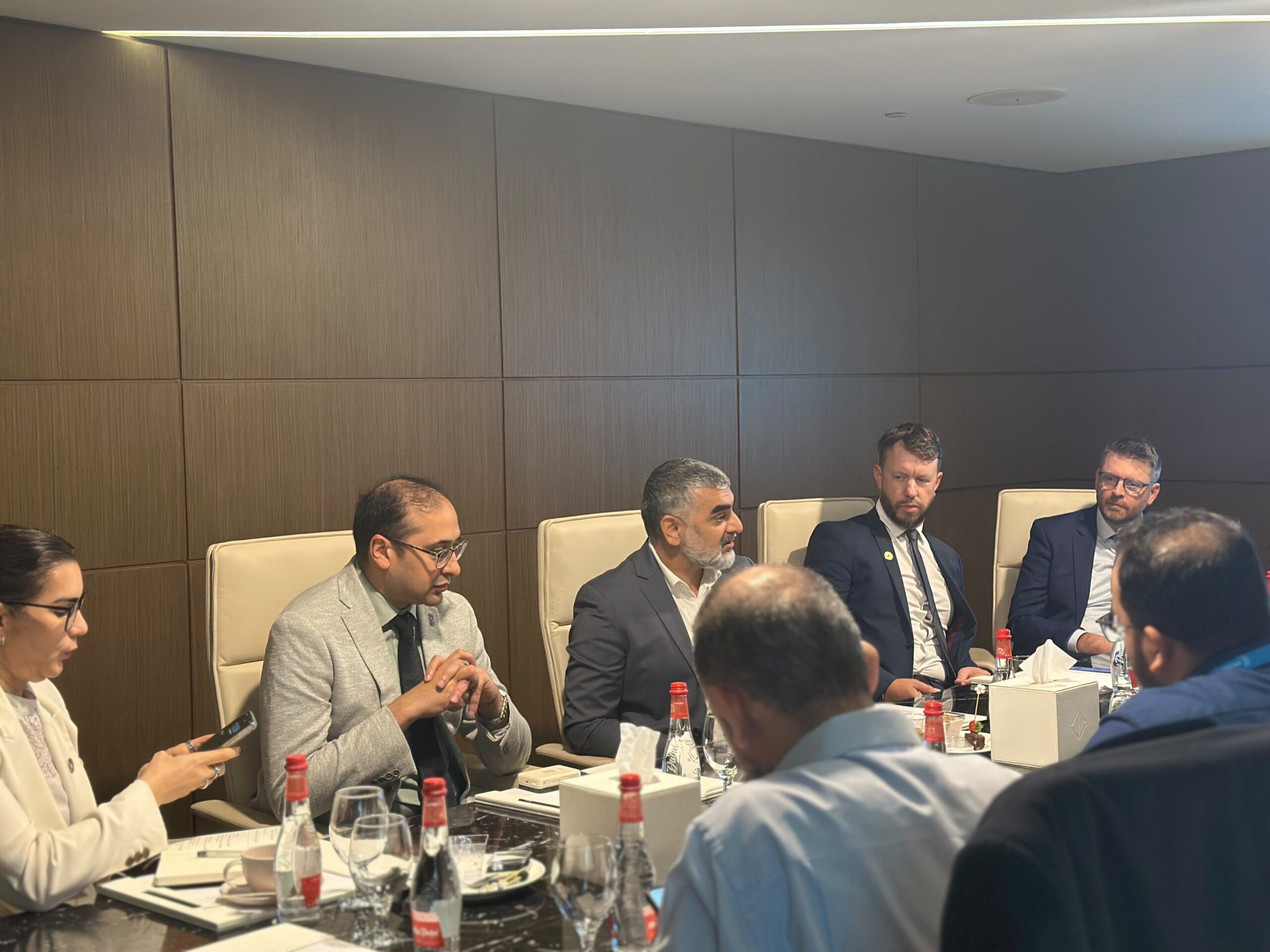
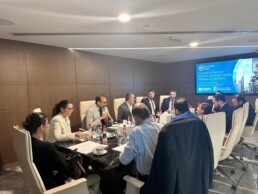
This ESG Majlis roundtable, held on Thursday 5 November 2026 at DIFC Conference Center brought together representatives from Emirates NBD, BEEAH Group, Wood and Zurich Insurance to explore the challenges and opportunities in transition finance.
The discussion examined the disconnect between capital availability and project readiness, the commercial case for decarbonisation, and the roles of different financial institutions in supporting transition-related investment. The session featured insights from Vijay Bains, Chief Sustainability Officer at Emirates NBD, and Omar Shaikh, Managing Director of GEFI.
Key discussion points that were covered during the interactive and dynamic session have been summarised below.
Bridging the Gap Between Capital and Investable Projects
Participants highlighted the difficulties businesses face in progressing decarbonisation initiatives towards final investment decisions, including assessing project costs, calculating emissions reductions and developing credible financing propositions. Regulation, technology, data and organisational capacity were also identified as important constraints.
The discussion suggested that greater engagement between businesses, financial institutions and investors at earlier stages could help improve project readiness, addressing the gap between sustainable finance commitments and actual capital deployment.
Making the Commercial Case for Decarbonisation
Participants challenged the assumption that sustainable investment necessarily involves higher costs, arguing that conventional assessments can overlook long-term efficiency gains and operational savings.
Examples involving green buildings, electric vehicles and sustainable construction materials illustrated the importance of distinguishing upfront expenditure from lifetime operating costs. One participant described how specifying the technical characteristics of sustainable materials, rather than labelling them as green, resulted in a lower quoted price.
The discussion highlighted the need to frame decarbonisation through measurable commercial benefits, including cost reductions, improved productivity and long-term returns. Integrating sustainability into conventional financial decision-making was seen as important for overcoming the perception that environmental performance necessarily comes at the expense of profitability.
The conversation also explored whether existing financing structures are adequately equipped to support projects involving unfamiliar technologies or business models. Participants noted that regulatory requirements, customer expectations and institutional mandates constrain commercial banks’ capacity to undertake equity-like exposures, while development finance institutions may be better positioned to provide higher-risk capital.
Strategic Partner:
In 2026, Emirates NBD launched the UAE’s first dedicated transition finance framework and issued a USD 1 billion blue-green bond. The bond is the largest Blue Bond issued in the UAE and the GCC, and the largest Dual-Tranche Blue-Green Bond issued by a financial institution globally.
Sustainable Sukuk and Credible Transition Frameworks
Participants examined the potential for capital markets to complement bank lending through sustainable bonds, transition debt and sukuk. However, the market for dedicated transition instruments was considered relatively immature, with questions surrounding the availability of suitable products and consistent investor demand.
The discussion highlighted the importance of credible frameworks for identifying eligible activities and demonstrating environmental outcomes. References to the ICMA Green Bond Principles and Climate Bonds Initiative standards illustrated differences between broad use-of-proceeds classifications and more detailed technical criteria.
For Islamic finance, sustainable sukuk offer opportunities to mobilise investment towards transition activities. Their effectiveness, however, depends on credible underlying projects, transparent disclosure and investor confidence in the environmental integrity of financing arrangements.
Beyond Exclusion: Active Stewardship and Engagement
The discussion also considered whether ethical and Islamic investment approaches should extend beyond negative screening towards more proactive shareholder engagement and stewardship.
Private equity was identified as particularly influential where substantial ownership stakes enable direct engagement with management. Asset managers and project-finance frameworks, including the Equator Principles, were also discussed in relation to strengthening environmental and social oversight.
The conversation suggested that engagement can complement financing and screening by encouraging tangible changes in corporate practices.
Key Takeaways
The discussion reinforced that effective transition finance requires more than capital availability; it depends on commercially viable projects, reliable data and credible investment propositions. Participants highlighted the complementary roles of commercial banks, development finance institutions and private investors in allocating risk and supporting different stages of the transition. Ultimately, credible financing instruments and active stewardship are essential to translating capital deployment into measurable environmental outcomes.
Conclusion: From Commitments to Investable Outcomes
The ESG Majlis highlighted that accelerating the transition requires more than expanding sustainable finance commitments. It depends on overcoming project-development barriers, establishing appropriate risk-sharing arrangements and strengthening coordination between businesses and capital providers.
Ultimately, the challenge is translating these opportunities into commercially viable investments that deliver credible environmental outcomes, moving sustainable finance beyond commitments towards measurable progress.
GEFI Advisory Insights: Advancing Transition Finance