
Reflecting on the numbers shared, the path forward seemed daunting. The financing needs for sustainable initiatives stretched to around $4.3 to $5 trillion per year, roughly 5% of the global GDP of $100 trillion. For many, this appeared insurmountable, yet it underscored the demand not only for funding but for innovation and transformation.
The End of ESG or Just the Beginning?
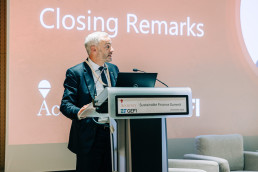
David Chollet, Accuracy observed that ESG had evolved beyond a strategic option to become a necessity. The pressing question was no longer whether a company had an ESG strategy but whether it had a strategy that would sustain it in an increasingly interdependent world. This marked a turning point where action took precedence over mere messaging.
Three Key Takeaways
- Scale of Investment Needs
The scale was unprecedented. For example, the energy sector alone demanded $1 trillion in new investments. However, this wasn’t just about pouring money into projects; it was about fundamentally transforming business models. Business-as-usual approaches were no longer viable. - A Financial Opportunity with Patience
This transformation presented financial opportunities but required a longer return on investment. Much like a “J-curve,” the rewards might not be visible for over a decade. This shift called for an adaptation in investor mindsets, with blended finance and innovative models gaining attention. The triad of corporations, public sectors, and financial markets had to collaborate to drive forward lasting solutions. - The Need for Urgency
Timing was critical—later was simply too late. David emphasised the need to think creatively, potentially introducing “green quantitative easing” or “green helicopter money.” Bold, accelerated action was essential to make a sustainable impact.
In closing, David reminded attendees: there was no sustainability without profitability, and no sustainable company could exist in an unsustainable world. As the French group Daft Punk famously put it, the need was to act better, faster, stronger.